
 Global
Event Report
As digitalization and the shift toward paperless processes continue, the printing market is shifting toward digital printing, opening up new opportunities for growth. RICOH Graphic Communications (RGC), one of Ricoh’s designated growth areas, is expanding into new fields with inkjet technology at its core.
At an RGC business briefing held on September 18, 2026, the company outlined how Co-Innovation with customers and partners is driving business transformation and helping create new markets. How does RGC plan to grow across commercial, industrial, and functional printing? We take a closer look at the strategies presented at the briefing.
Commercial and industrial printing are the two main pillars of RGC’s business, while functional printing is being developed as a new growth area.
RGC is expanding beyond commercial printing, centered mainly on paper, into industrial printing on a wide range of materials and products, and further into functional printing that applies printing technologies in new ways.
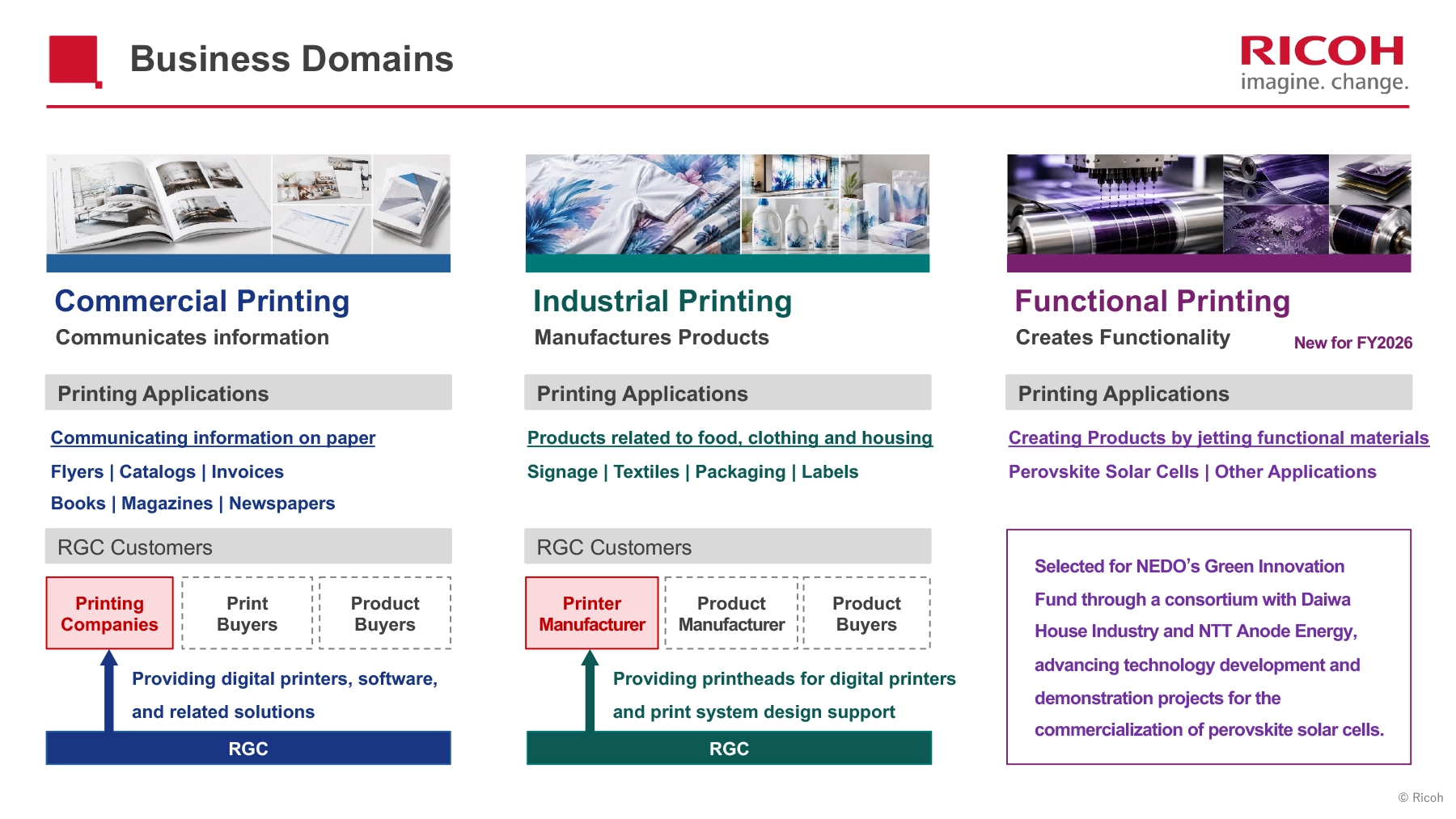
RGC’s business areas
In fiscal 2025, RGC recorded sales of ¥284 billion, accounting for approximately 10% of total Ricoh Group sales. As RGC addresses digital printing needs around the world, it aims to contribute both to customers’ business growth and to a sustainable society.
Beyond printing on paper, RGC is expanding printing applications across diverse media and developing new businesses. Through these efforts, the company is creating value that contributes to “Creativity from Work” and “Zero-carbon society and circular economy.”
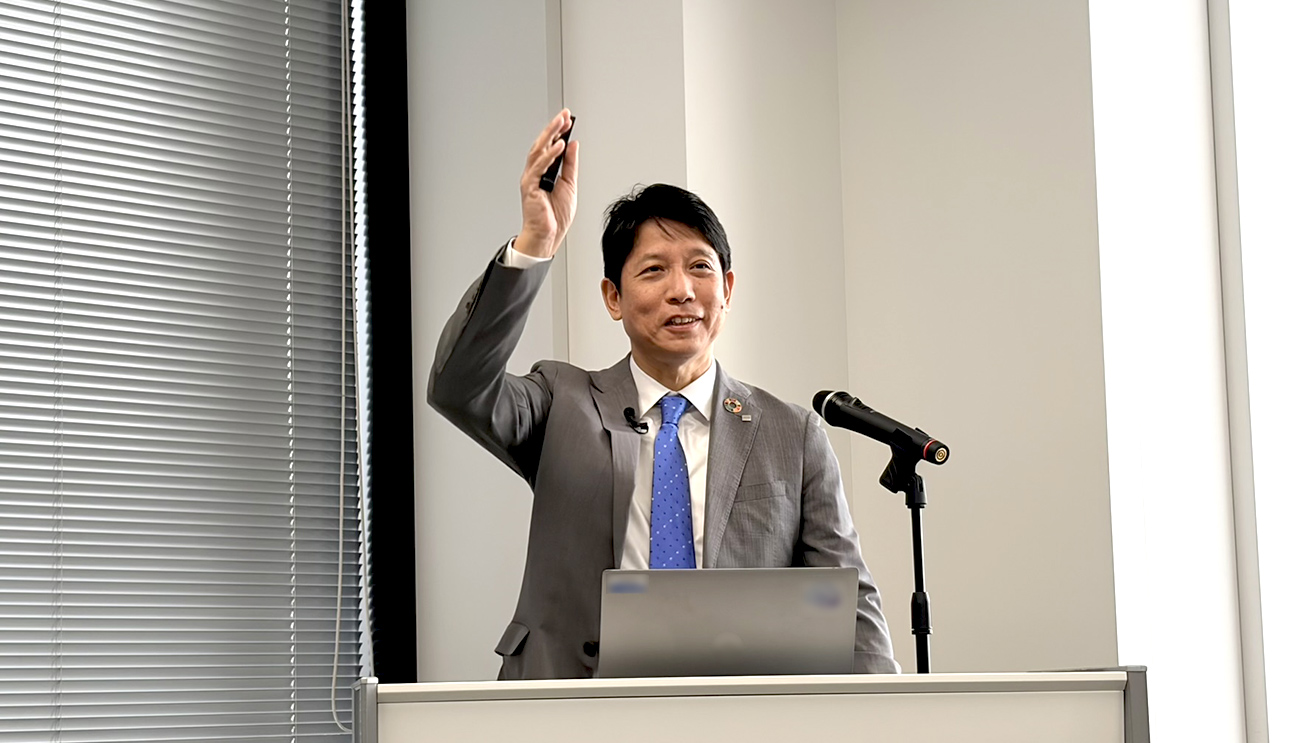
At the briefing, Koji Miyao, President of RGC, explained that Ricoh has grown throughout its long history by shifting the focus of its business as markets have evolved.
To strengthen its competitiveness amid continued market change, RGC plans to drive business transformation through Co-Innovation with customers and partners.
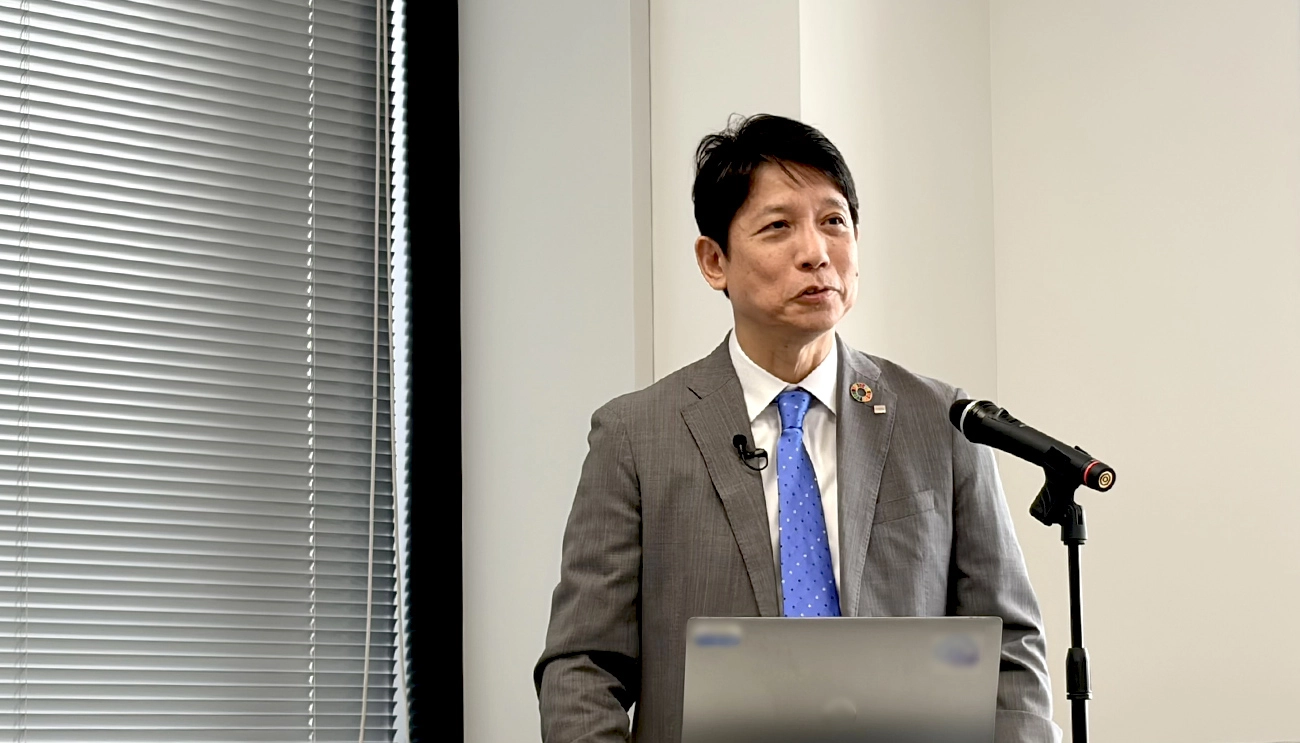
Koji Miyao / President, RICOH Graphic Communications, Ricoh
Printing needs are becoming more diverse, with growing demand for shorter print runs. In commercial printing, even as paperless processes advance, demand is growing for applications such as personalized direct mail tailored to individual recipients.
Industrial printing is seeing a similar shift toward high-mix, low-volume production, particularly for packaging and labels.
Digital printing is attracting attention as a way to meet these needs. While analog printing excels at mass production, digital printing provides the flexibility required for shorter print runs, making it increasingly important in the market.
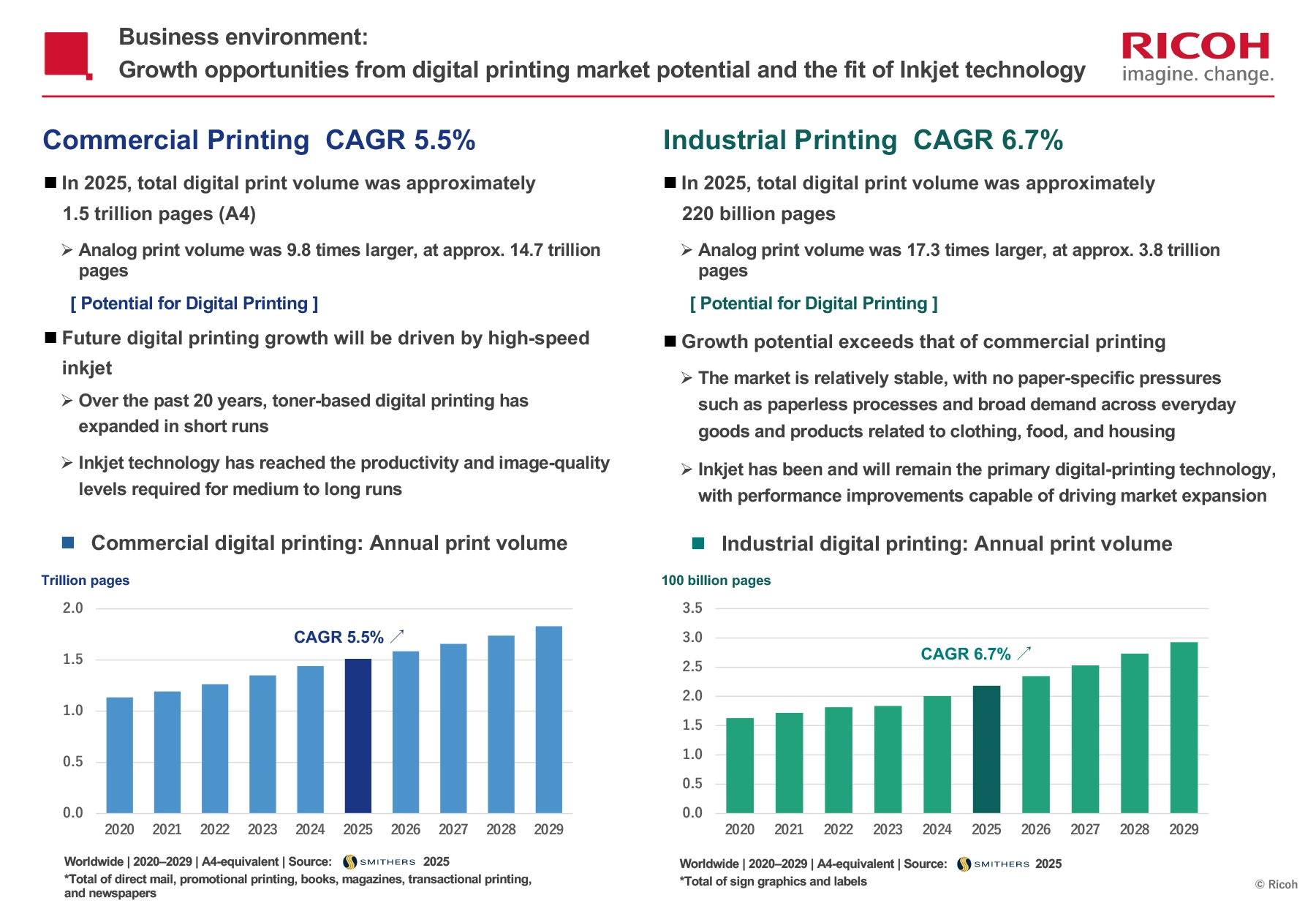
Market outlook: Growth opportunities created by the expanding digital printing market and the suitability of inkjet technology
According to Miyao, Smithers research projects that digital print volumes will grow at an average annual rate of 5.5% in commercial printing and 6.7% in industrial printing. Inkjet technology, which supports digital printing, is expected to be a key driver of this growth.
RGC plans to continue investing in inkjet technology, using it to help address customer challenges and drive further growth.
Miyao went on to outline specific strategies for RGC’s three business areas: commercial printing, industrial printing, and functional printing.
Together, these initiatives span the strengthening of RGC’s earnings base and investment in future growth areas, providing a broader view of how the company plans to grow.
Commercial Printing: Transforming Customer Businesses through Co-Innovation
Commercial printing covers paper-based materials used to communicate information, including flyers, catalogs, invoices, and books. RGC primarily provides printing companies with digital printing systems, software, and related solutions.
Helping customers transform their businesses is central to RGC’s commercial printing strategy. Alongside improving its products and services, RGC is advancing “Co-Innovation,” its approach to creating new value together with customers and partners.
Businesses have a wide range of options when investing in printing equipment, and it can take time for those investments to generate returns.
“That is why printing companies need a partner who can support them every step of the way, from equipment selection and implementation to ongoing operations and achieving returns on their investments,” Miyao said. “To meet these needs, RGC will continue to focus on Co-Innovation.”
Supporting Business Transformation through Global Co-Innovation
One example of Co-Innovation in commercial printing is RGC’s work with U.S.-based printing company Amsive.
Amsive is a marketing company that handles approximately two billion pieces of direct mail each year. To deliver effective direct mail tailored to consumers’ interests and attributes, digital printing that can customize each individual piece is essential.
In addition to providing high-speed printing equipment, RGC is helping transform Amsive’s business by building workflows that connect marketing, printing, and logistics.
RGC has also maintained a strategic collaboration with Heidelberg, a leading global manufacturer of offset printing presses, since 2011.
By combining their respective strengths in analog and digital printing, the two companies provide customers with a “hybrid workflow” that enables printing operations to respond flexibly to a wide variety of orders.
“We will further strengthen our support for customers’ business transformation by advancing Co-Innovation globally,” Miyao said.
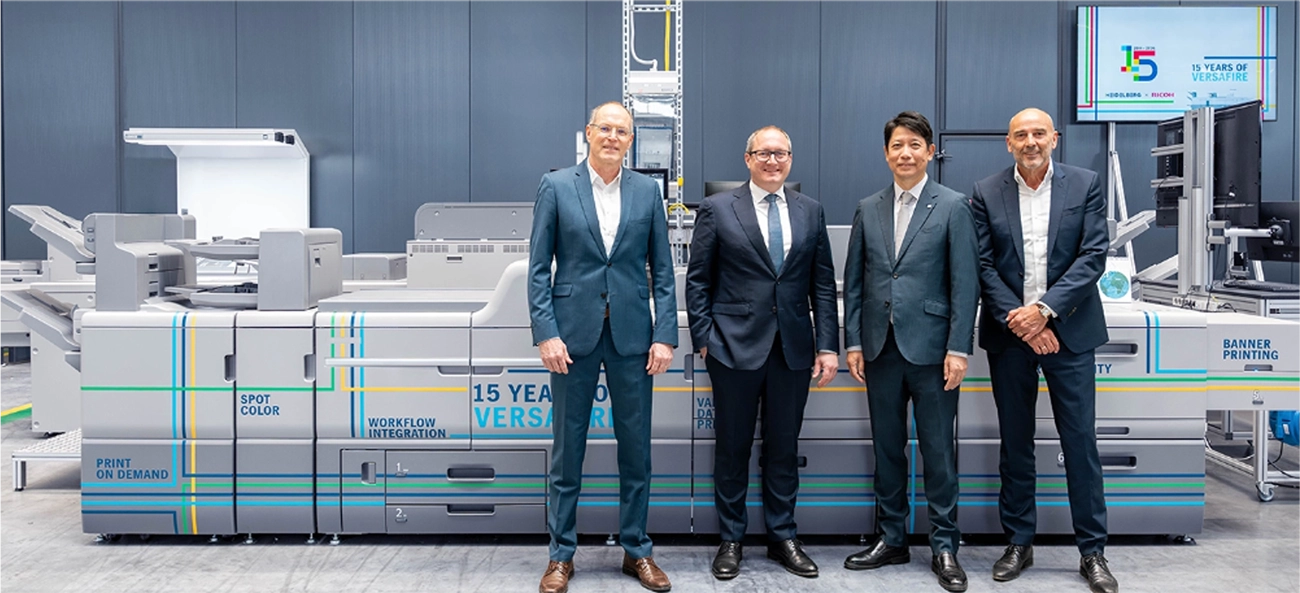
Strategic collaboration with Heidelberg
Industrial Printing: Accelerating Growth with a Next-Generation Factory
In industrial printing, RGC is working to expand its inkjet head production capacity while building a next-generation manufacturing foundation that makes use of AI.
At the heart of this strategy is a new building planned for Ricoh’s Atsugi site in Kanagawa Prefecture.
Construction is scheduled to begin in November 2026, with completion planned for the first half of fiscal 2028. The new building will serve as a core production facility for inkjet heads, helping RGC meet growing demand. It will also serve as a hub for next-generation manufacturing incorporating AI.
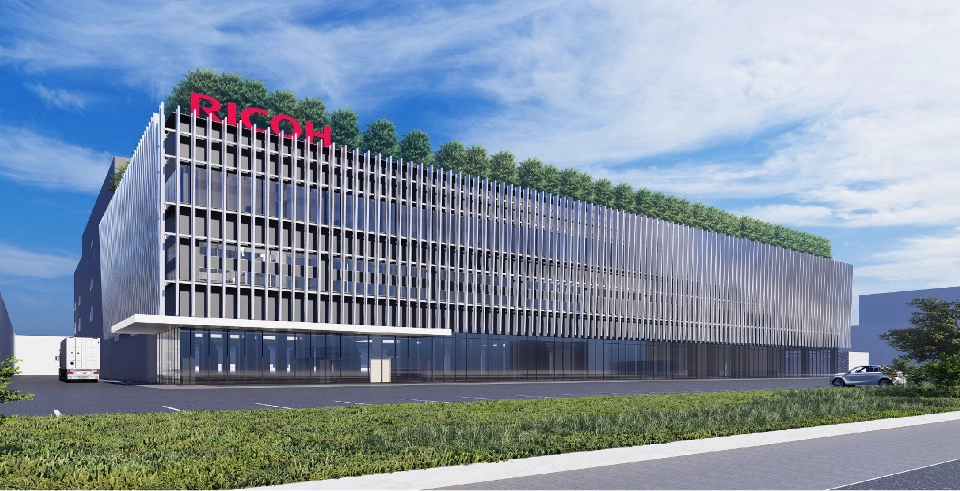
The concept for the new building is a “next-generation factory where people and AI co-create.”
Functions currently spread across several buildings at the Atsugi site will be consolidated into the new facility. By bringing these functions together, RGC aims to make manufacturing more productive and flexible while building on Ricoh’s precision technologies and quality capabilities.
The company will also convert the knowledge and skills of experienced technicians into data and standardize them so they can be used across the organization. Through this approach, RGC aims to address the societal challenge of a shrinking workforce.
The new factory will also use physical AI to reduce the labor required for routine tasks.
Miyao explained that RGC will continue advancing its world-class technologies while enabling people and AI to work together. Through these efforts, the company aims to build a next-generation production system capable of stable 24-hour operation, combining high quality with stable supply while creating an environment where people can focus on more creative work.
Functional Printing: Investing in New Growth Areas with Inkjet Technology
Miyao then turned to RGC’s investment strategy for functional printing. This emerging field applies inkjet technology to precisely deposit materials with properties such as electrical insulation and thermal conductivity.
“By investing in new businesses that apply Ricoh’s printing technologies, we will develop new pillars of growth,” Miyao said.
Building on technologies developed through commercial and industrial printing, RGC is now looking to create new markets.
Addressing Social Challenges with Next-Generation Solar Cells
One area of RGC’s functional printing business is perovskite solar cells, which are attracting attention as a next-generation solar technology.
Conventional silicon-based solar panels are relatively thick and heavy, which can limit where they can be installed. Perovskite solar cells, by contrast, are thin, lightweight, and film-based, making them easier to install on existing buildings and walls.
For Japan, where available flat land is limited, this offers the potential to use existing buildings to generate renewable energy.
Japan is also one of the world’s leading producers of iodine, a principal material used in perovskite solar cells. Miyao explained that the technology therefore also holds promise from the perspectives of building domestic supply chains and strengthening economic security.
Ricoh is applying inkjet technology to the production of perovskite solar cells.
Conventional solar-cell manufacturing involves applying multiple thin layers and then removing material to create patterns, a process that requires large and costly equipment. Inkjet printing takes a different approach: it deposits precisely the amount of material needed, exactly where it is needed.
By printing patterns directly rather than removing material afterward, the process can help reduce the size of production equipment as well as material and energy losses.
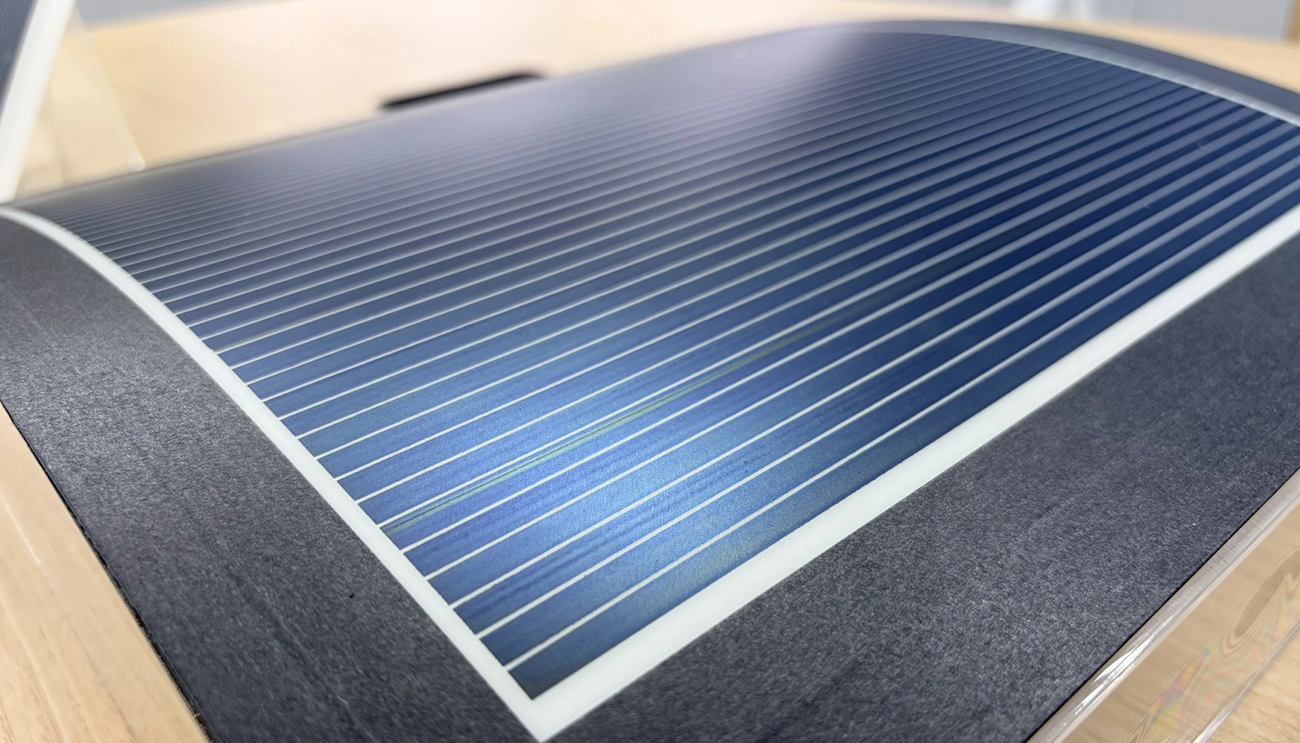
Perovskite solar cells manufactured using inkjet technology
“With this technology, we can help transform buildings from places that consume energy into places that generate it,” Miyao said.
A consortium with Daiwa House Industry and NTT Anode Energy is currently conducting demonstration testing, with commercialization targeted for 2030.
By applying inkjet technologies developed through its commercial and industrial printing businesses, Ricoh aims to create new growth areas that also help address social challenges.
After the briefing, participants visited the Ricoh Printing Innovation Center, where they were introduced to print samples and examples of how Ricoh’s technologies are being applied.
Participants experienced the quality and impact of printed materials firsthand through samples produced using the latest technologies.
They also asked detailed questions about topics including digital printing needs and potential applications for perovskite solar cells. Throughout the visit, RGC representatives and participants exchanged views in lively discussions.
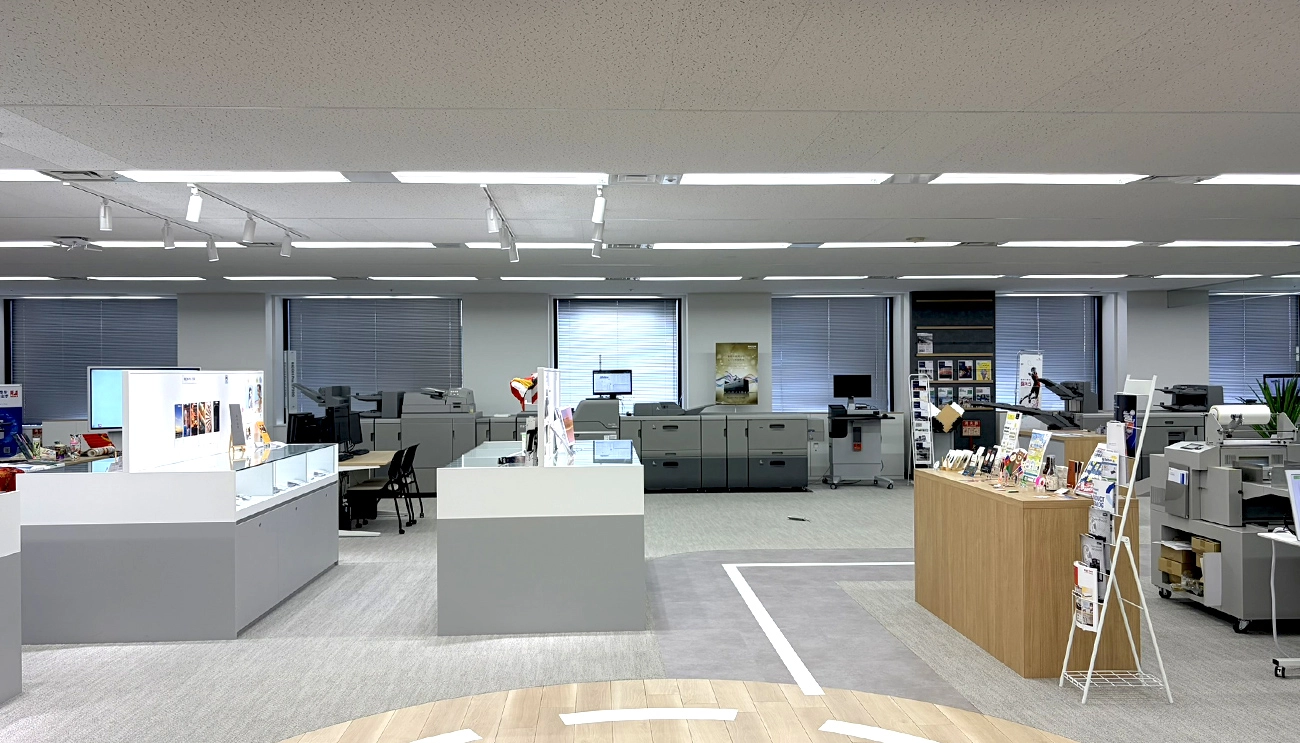
Ricoh Printing Innovation Center
Printing is no longer a technology that creates value only on paper.
RGC is drawing on the customer base and technologies it has built through commercial printing to capture opportunities in the growing digital printing market. At the same time, it is extending inkjet technology into industrial and functional printing to create new markets.
The briefing showed RGC strengthening its existing businesses while investing in new areas for the future. With Co-Innovation and inkjet technology at the heart of these efforts, RGC is broadening the role printing can play—and opening up new possibilities for growth.


