Global
Ricoh's Initiatives
Lithium-ion batteries from smartphones, power packs, and other everyday essentials often end up in regular household waste in Japan, even though municipalities require separate disposal as hazardous waste. They can catch fire in shredders or crushers at waste-processing facilities, triggering shutdowns and expensive recovery work.
Ricoh subsidiary PFU tackled this issue by drawing on its imaging expertise to develop Raptor VISION BATTERY. Released on October 31, 2025, this platform combines PFU’s sensing technologies with artificial intelligence to spot batteries in waste streams before they reach treatment equipment, helping operators make their facilities safer and more efficient.
Two PFU executives told us why the company decided to apply Raptor VISION technology to this problem. They are Noboru Tabata, Director of the RAPTOR Business Development Department in the Next-Gen Business Development Division of PFU’s Business Development Group, and Masanobu Hongo, senior manager for product development in that department.
Estimated reading time: 8 minutes
Raptor VISION is an AI engine that PFU began developing around five years ago to recycle resources and remove hazardous materials from waste streams. Mr. Hongo recalls, “We realized that our optical and image-recognition technologies could contribute to safety and efficiency at waste treatment facilities that still rely heavily on manual labor.”
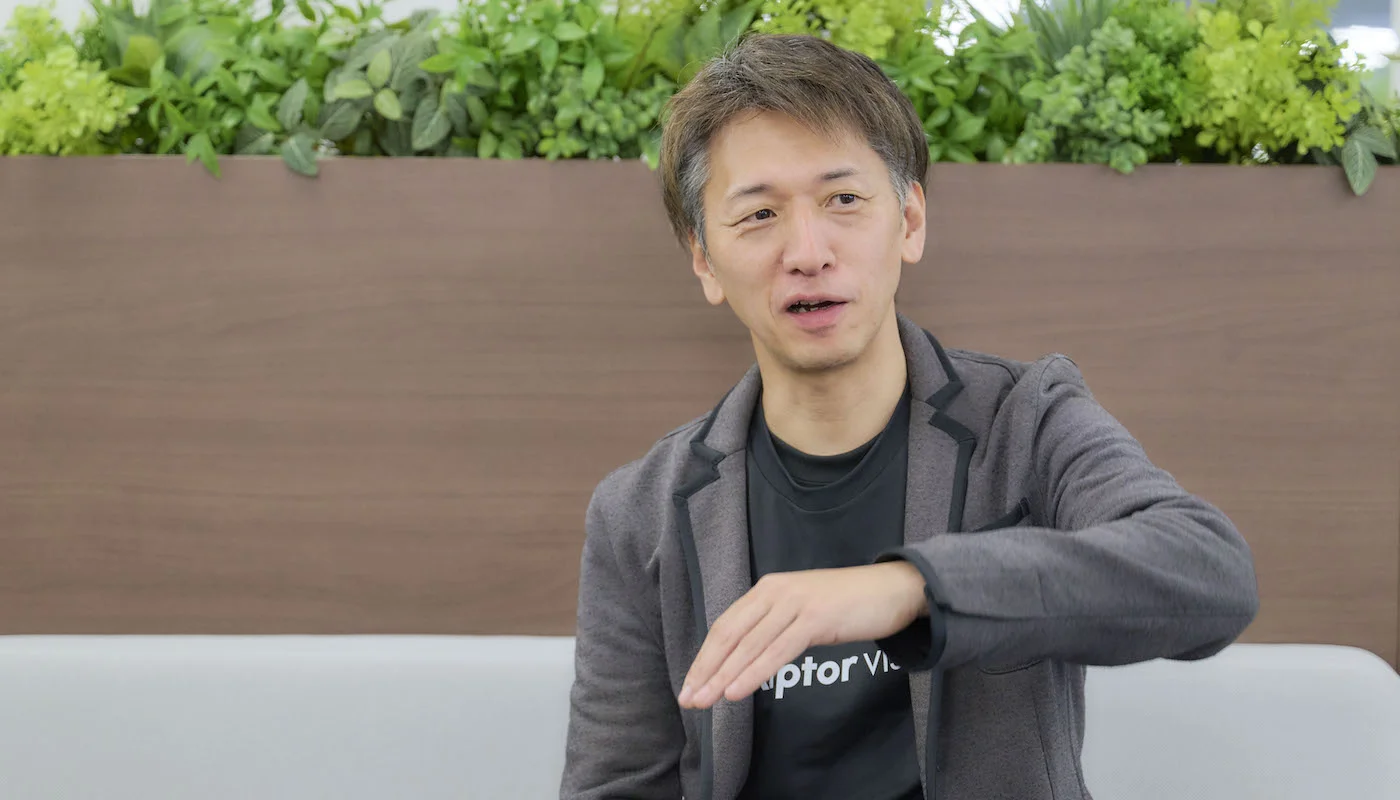
Masanobu Hongo, senior manager for product development in the RAPTOR Business Development Department of the Next-Gen Business Development Division of PFU’s Business Development Group
The first Raptor VISION engine we provided automatically identified bottle types. Waste facility operators praised its accuracy, but they soon pushed for a version that could detect lithium-ion batteries, which pose great risks at disposal sites.
Mr. Tabata says, “Feedback from operators made it clear just how urgent the problem had become.”
Still, Mr. Hongo notes that his team faced considerable development challenges. He says, “We had to find lithium-ion batteries inside bags, and a visible-light camera could not do the job.” He adds, “Batteries come in many shapes, so we switched our approach and used X-ray transmission images instead. We worked with IHI Inspection & Instrumentation Co., Ltd. to build a prototype lithium-ion battery detection system integrating the Raptor VISION engine into X-ray measurement equipment.”
The lithium-ion battery detection system begins with loading bagged waste onto a conveyor belt to pass through an X-ray transmission imaging tunnel. An AI engine analyzes the images to pinpoint the battery location. The system then illuminates the detected area to alert the operator.
Mr. Hongo explains, “We harness dual-energy X-ray technology to obtain detailed information. Our proprietary algorithm analyzes transmitted images that appear orange, green, or blue depending on the material to identify characteristics like shape, pattern, and color intensity and identifies lithium-ion batteries.”
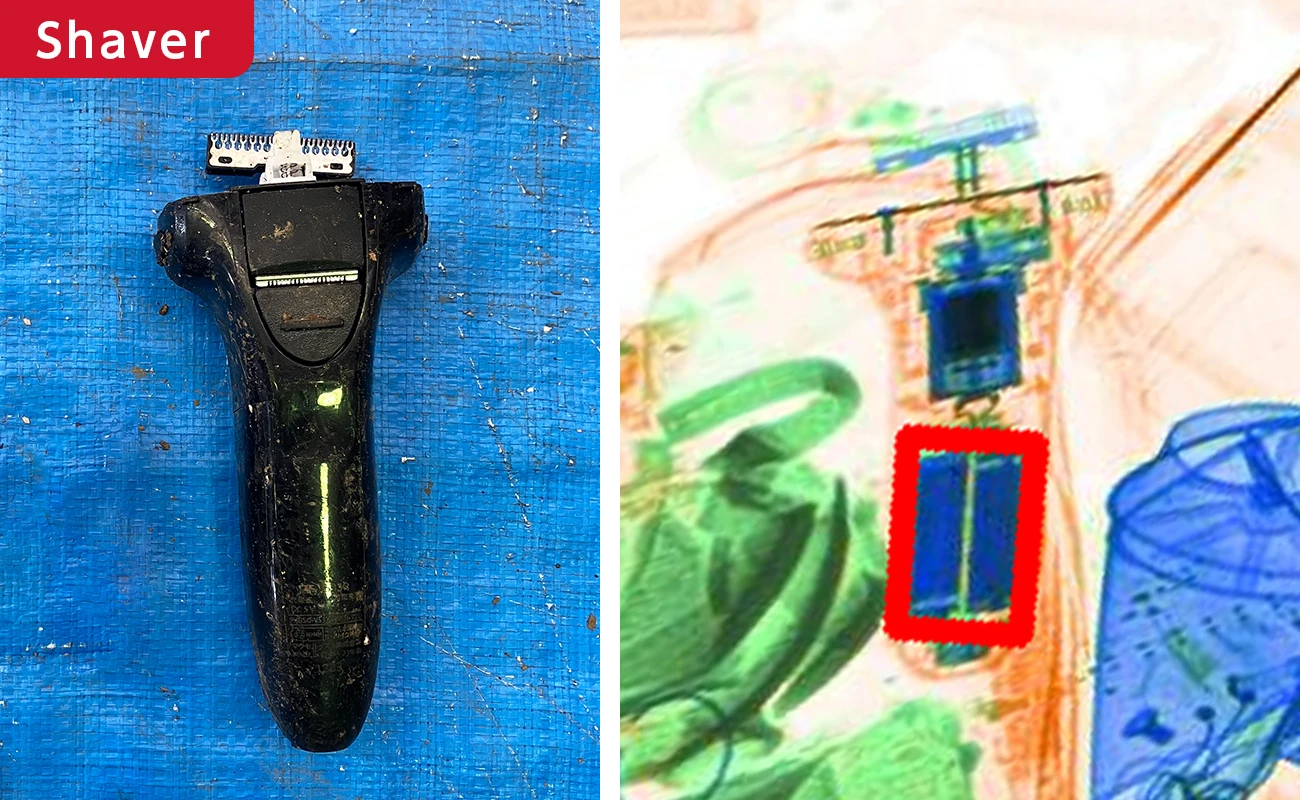
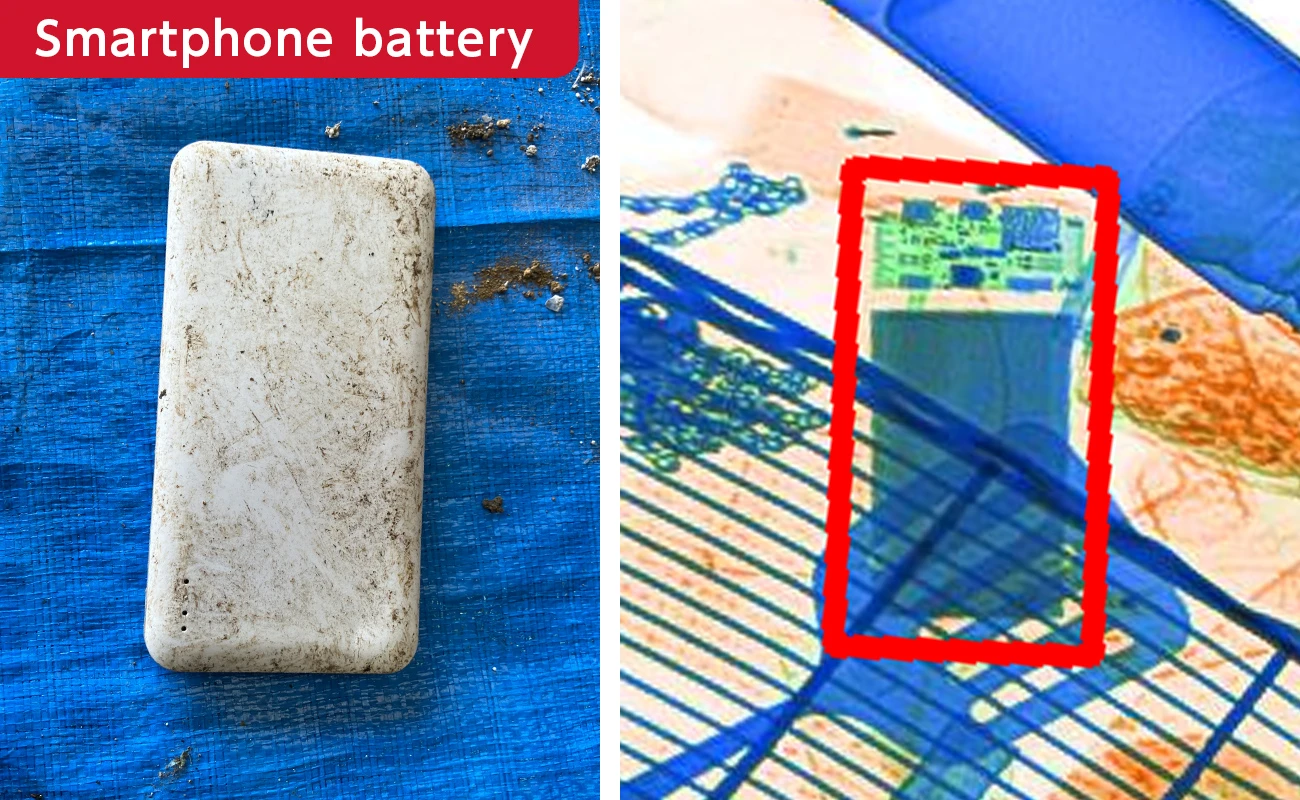
AI engine-based image detection
A prototype trial at the Machida City Bio-Energy Center in September 2024 verified the system’s recognition accuracy and operational feasibility. PFU ran 420 tests before and after bag rupture with 1,562 kg of non-burnable waste. The detection rates were 87% before bag rupture and 98% after. The trial also revealed some commercialization challenges.
Mr. Hongo says, “For field use, we needed to address points like dustproofing and waterproofing and belt conveyor strength to withstand the waste weight. We also analyzed where detection failed and studied ways to enhance recognition accuracy.”
The development team drew on findings from the first proof-of-concept trial to constantly improve the equipment and AI recognition engine. One key overhaul was to the X-ray irradiation direction.
Mr. Hongo says, “Lithium-ion batteries come mainly in cylindrical, prismatic, or pouch form. Depending on the X-ray irradiation angle, it can be hard to capture their features effectively. So, we augmented conventional top-down irradiation with irradiation from the left and right. Analyzing information from both axes improved the algorithm’s recognition accuracy. We expect further accuracy gains as operational use increases the volume of training data.”
PFU used the improved, finalized system to conduct a second proof-of-concept trial at the Machida City Bio-Energy Center in August 2025. While the testing conditions were more demanding, the system again achieved a high detection rate, with on-site usability improving.
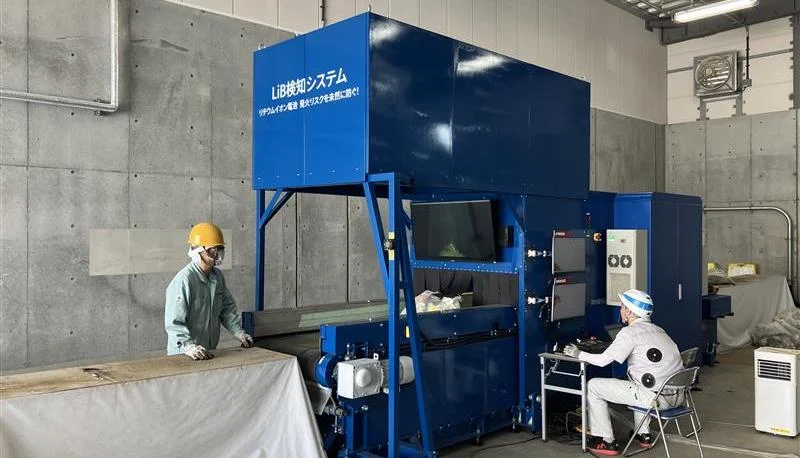
PFU trialed its prototype at the Machida City Bio-Energy Center
Mr. Tabata says, “Operators were delighted to detect batteries that they had missed before. We moved ahead with a post-implementation maintenance plan. Feedback from manufacturers and media representatives seeing our system sparked valuable new ideas.”
Mr. Hongo recalls that it was especially challenging to select the X-ray method and improve the AI engine’s accuracy. “We went through extensive trial and error before settling on dual-energy X-rays. We tested various approaches, including combining X-ray and visible images, while developing the AI engine. It was technically demanding to build separate algorithms for pouch-type lithium-ion batteries, which vary widely in thickness and shape, and to combine multiple engines to raise recognition accuracy.”
Mr. Tabata adds, “Lithium-ion battery contamination is a global issue. After April 2026, we’ll start exploring market potential for Raptor VISION in North America, with a view to a global rollout.”
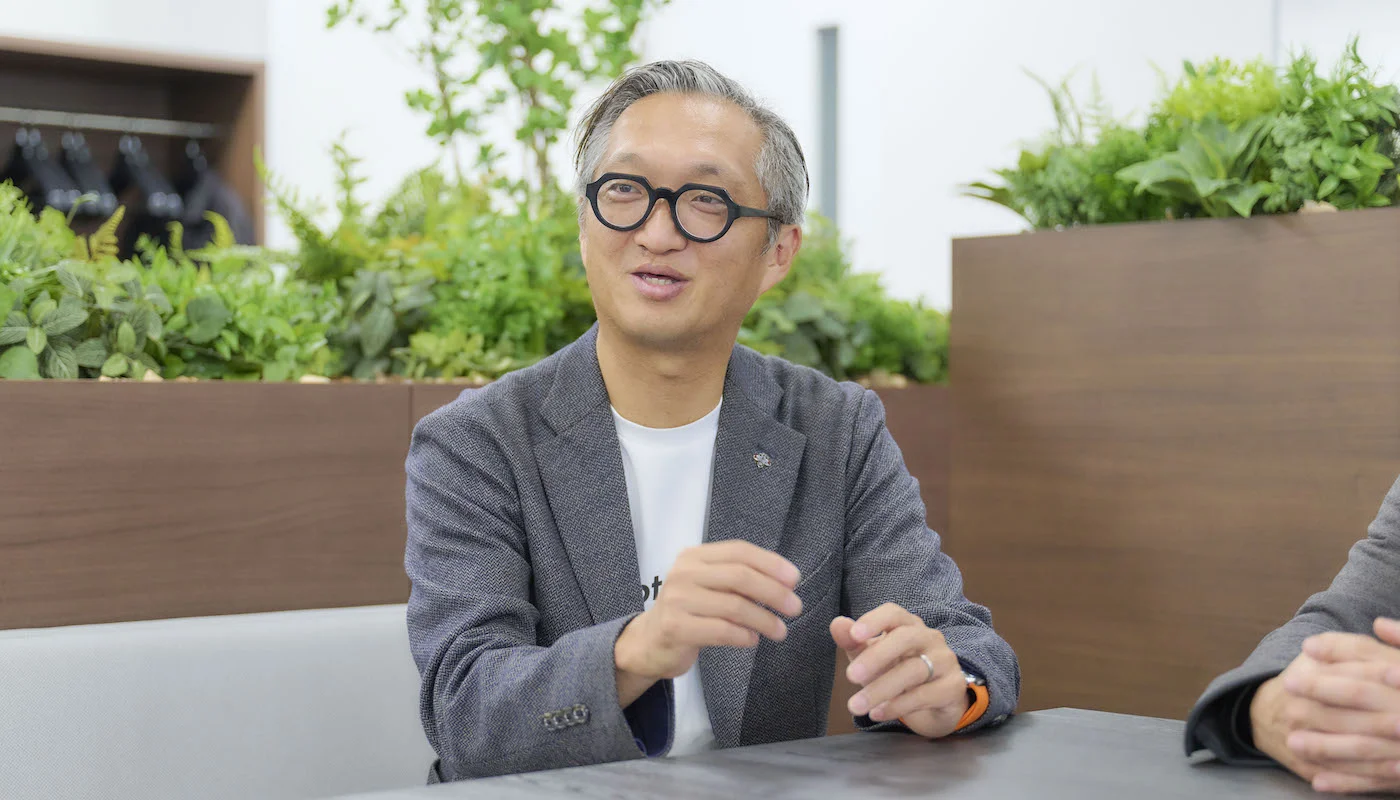
Noboru Tabata, Director of the RAPTOR Business Development Department of the Next-Gen Business Development Division of PFU’s Business Development Group
Raptor VISION could help address diverse waste-management challenges. Mr. Tabata says, “Recycling is gaining steam worldwide. The European Union requires the use of recycled materials in certain products. Recycling rates will only keep rising, and accurate sorting is essential. We believe Raptor VISION can support recycling worldwide and help build a more sustainable future.”
Mr. Hongo believes Raptor VISION could also change how waste processing sites operate. “Once you work with waste on site, you see how hard the job really is. Conditions are unsanitary, and summer heat can be brutal. Yet the work is essential. I want machines to take on the toughest tasks so people can focus on what only humans can do. With our technology, we can help remove hazardous materials and ease that burden.”
Mr. Tabata and Mr. Hongo say their work on Raptor VISION has given them a strong sense of purpose as a vehicle for resolving social challenges. For Mr. Tabata, it is his first time working on a new business venture. “In a new venture, there’s no right answer,” he says. “We had to think for ourselves. We built networks with people in industries PFU had never worked with, and we kept refining Raptor VISION. It’s stimulating work, and I find myself growing every day.”
Mr. Tabata says his team values action above all. “Working on a new venture taught me that inaction gets you nowhere. If you move, you can fail but you’ll always get a response. That’s why we try everything. In a new venture, I think you should go full steam ahead until someone tells you to slow down.”
This new venture is also a first for Mr. Hongo, who has spent about 25 years at PFU in scanner technology R&D. “I worked deep in a narrow field, so I rarely had the chance to speak with customers or offer ideas to senior management. Product development brings a different kind of satisfaction. This project has drawn a lot of public attention, and new challenges like speaking at conferences have been valuable experiences. They also keep me motivated at work.”
Raptor VISION helps tackle social challenges and supports people working in harsh conditions. This new effort is still taking shape, and expectations are rising for how far it can go.