Global
Ricoh's Initiatives
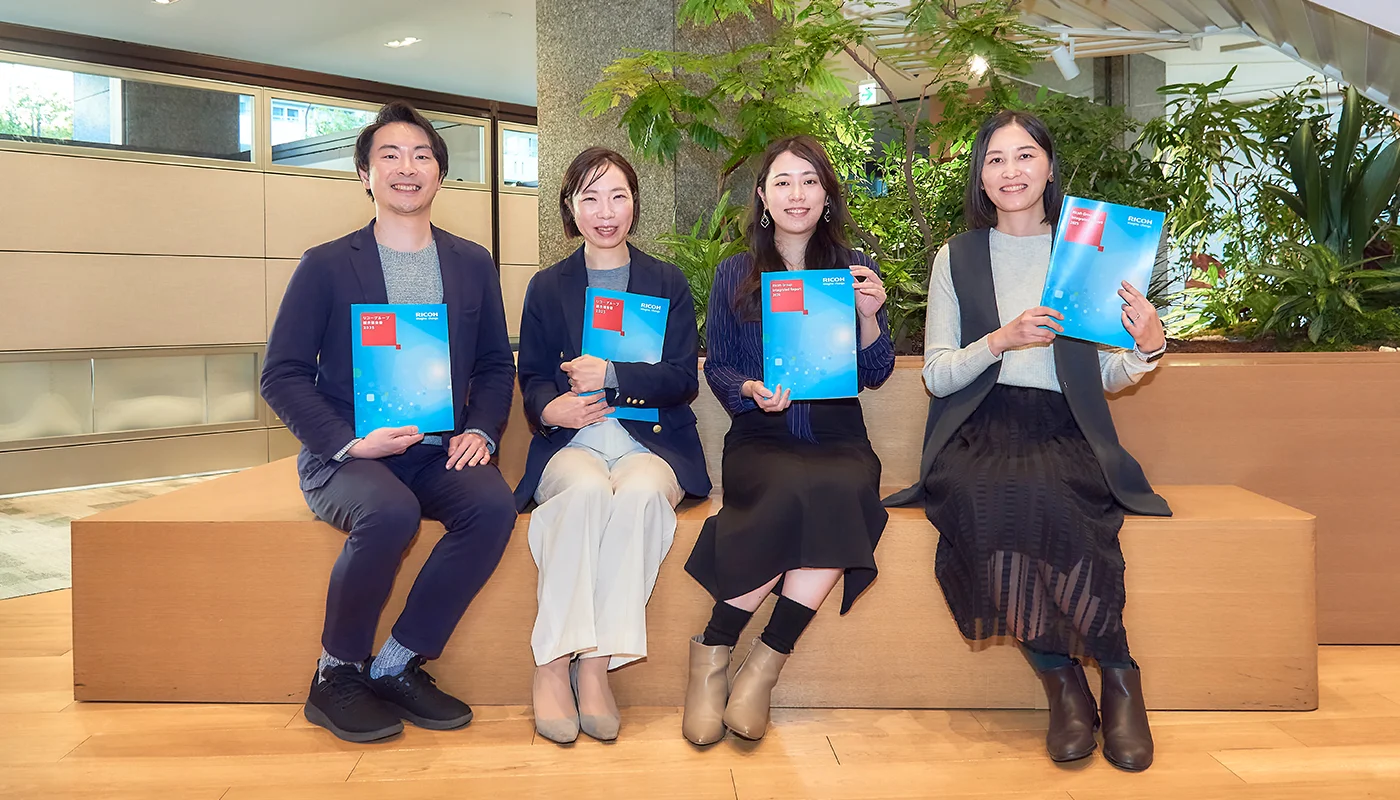
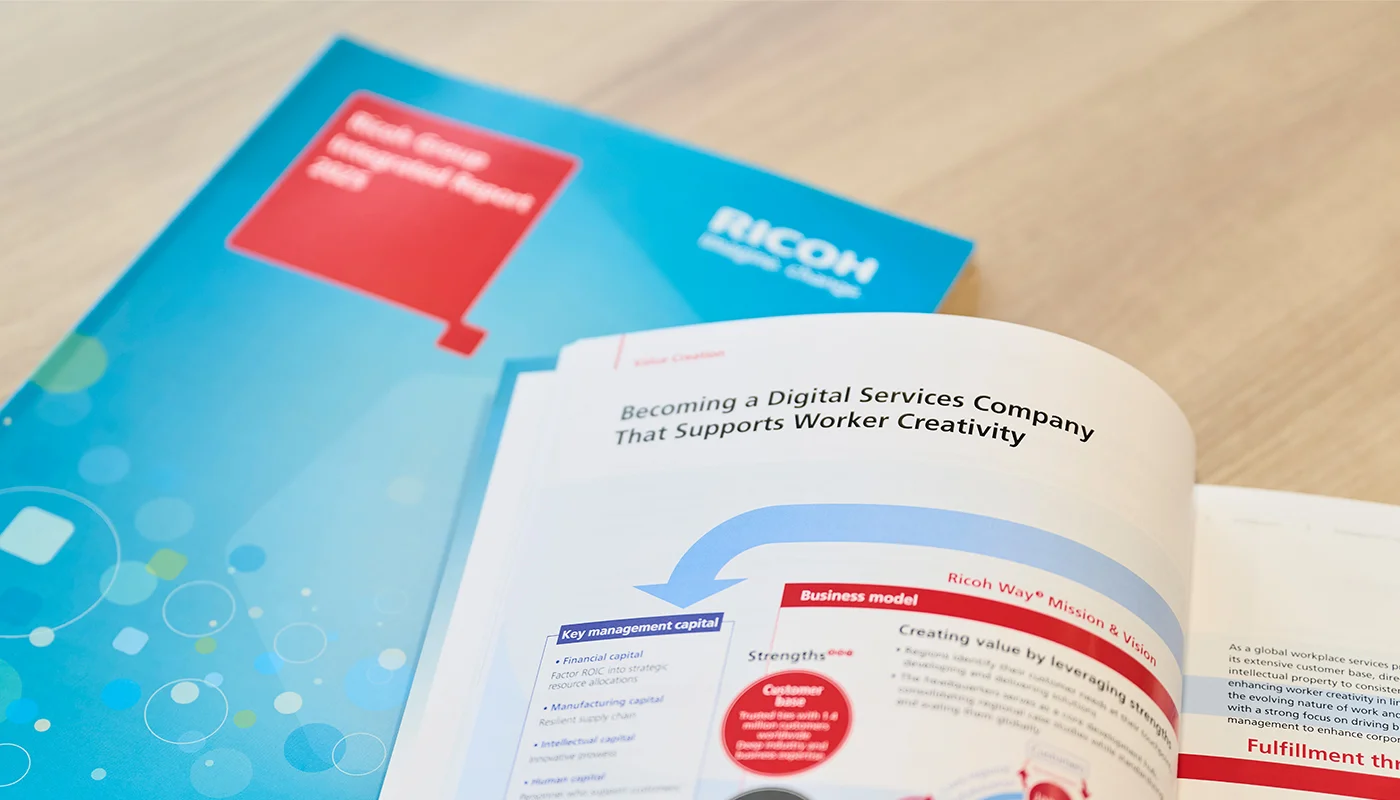
The Ricoh Group’s Integrated Report tells the story of Ricoh today and tomorrow through its management strategy, transformation into a digital services company, and financial performance. What thinking and creative choices shaped the fiscal 2025 edition, published in September 2025? We sat down with Kaori Hamada of the ESG Strategy Division, Ryotaro Fujiyama of the Technology Management Division, Maako Kogo of the RICOH Digital Services business unit, and Minako Sakamoto of the Communication Strategy Center, which publishes the report, to discuss the ideas and efforts behind its creation.
Estimated reading time: 9 min
——Tell us about your roles in producing the Integrated Report and what you wanted readers to take away from it.
Sakamoto:Ricoh publishes this report every year. We oversaw everything from setting the direction and structure to final editing. We drew on investor feedback on the 2024 edition to clearly articulate Ricoh’s aspirations over the short, medium, and long terms. We also wanted to highlight its strengths and more clearly link current and future financial performances. We focused particularly on making our strategy more specific and the information more compelling for readers.
We added more specifics by including customer and employee highlights and presenting more success stories in business segment reviews. We highlighted Ricoh’s global strengths by featuring examples from around the world.
Kogo:On behalf of RICOH Digital Services, I was mainly responsible for pulling together success stories and other content for that business unit. Share price trends and analyst assessments make it clear that Ricoh must change. So, in this report I wanted to show how digital services can generate revenue and materialize our strategy.
Hamada:I was responsible for the pages on ESG strategy and other sustainability topics, including environmental and social initiatives. Our disclosure always reflects investor feedback, and we leaned on it even more for this report. Ricoh’s work on environmental and social issues has earned recognition, but interest is growing in how ESG links to financial performance. This year, we made that connection clearer and easier to follow.
Fujiyama:I was responsible for technology and intellectual property strategy, as well as digital strategy. Since this is the final year of our mid-term management strategy, I focused on highlighting achievements to date. Under Yasuyuki Nomizu, our chief technology officer, the Technology Management Division and Digital Strategy Division work closely together and bring diverse strengths to the table. My goal was to show that this synergy is real and that we are heading in the same direction.
Sakamoto:We started by deciding which success stories to feature. Turning them into articles from scratch was a real challenge because each had to showcase Ricoh’s robust customer engagement, global capabilities, and proprietary technologies and software. We also needed customer cooperation, so this production project extended beyond the Ricoh Group.
In writing the success stories, we were mindful to detail the customer challenges and how we addressed them and helped resolve broader societal issues.

Minako Sakamoto
Media Design Department, Communication Strategy
Center
Hamada:This year’s Integrated Report was very well received internally. People appreciated its numerous case studies and the readability.
Sakamoto:I’m delighted to hear that. Some younger employees told us they were pleased to see success stories featuring customers they work with. It really drove home how sharing employees’ work externally can boost job satisfaction. We also included interviews with employees supporting our transformation in the feature section, so I think many readers will relate to those voices as well.
Kogo:The digital services section was a heavy lift. We needed input on everything from global trends to how our priority businesses are tracking across RICOH Digital Services, as well as customer success stories. There was a lot to verify and align with counterparts, so the workload added up quickly. We also changed how we presented the information this year to tie it more clearly to our return on invested capital initiatives. We made it work by teaming up across the business unit and leaning on colleagues who know the details.
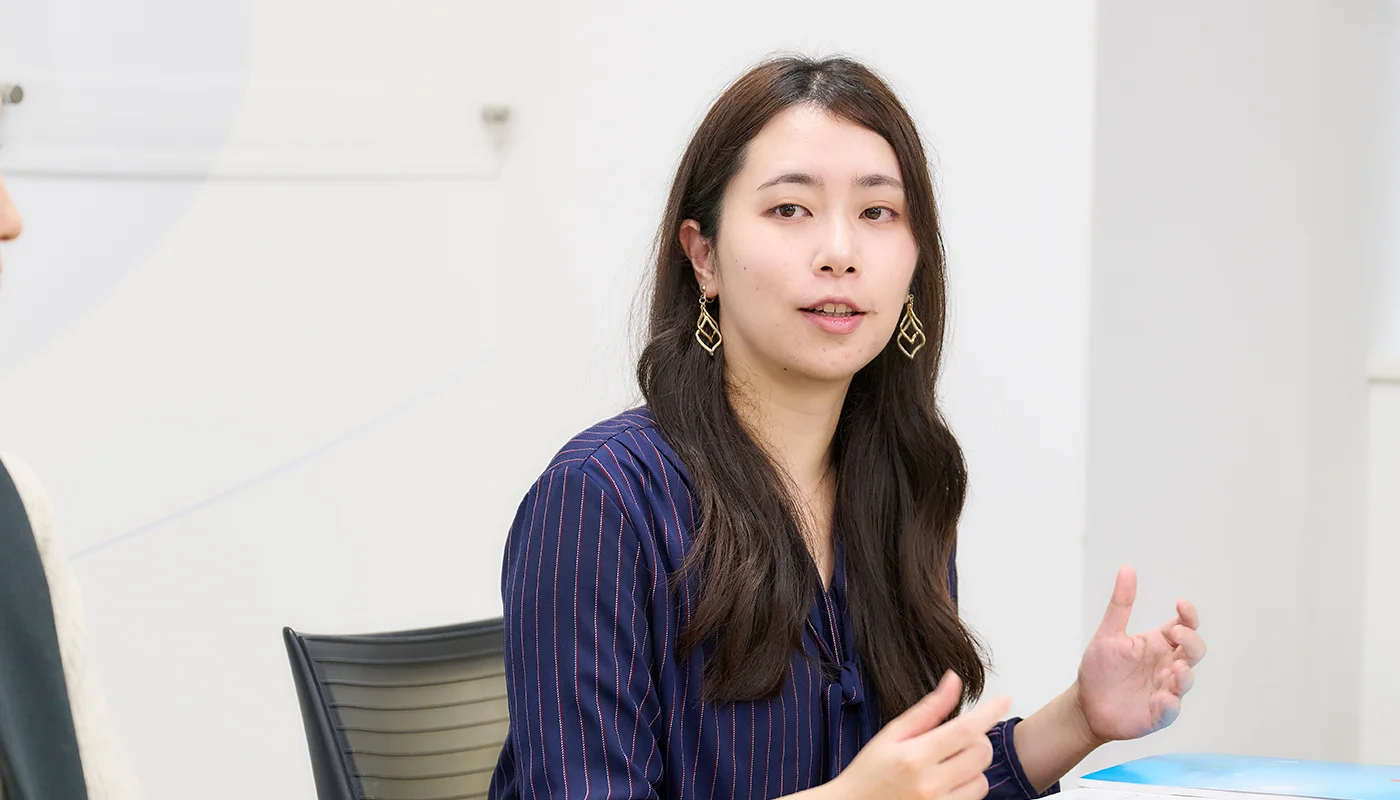
Maako Kogo
Corporate Planning Division, Corporate Strategy
Office, RICOH Digital Services
Hamada:The report’s Sustainability section summarized particularly important initiatives, leaving details to the Ricoh Group Sustainability Report 2025. Limited space made it hard to decide what to prioritize, but we kept readers in mind and explained Ricoh’s approach as simply as possible. We also avoided overlap between the Sustainability Report and the Integrated Report, which helped strengthen both publications.
Another approach was to clarify the financial impacts of ESG that investors care about. We did that by highlighting rising ESG requirements from customers and including specific examples of how supporting ESG initiatives has generated new business opportunities.
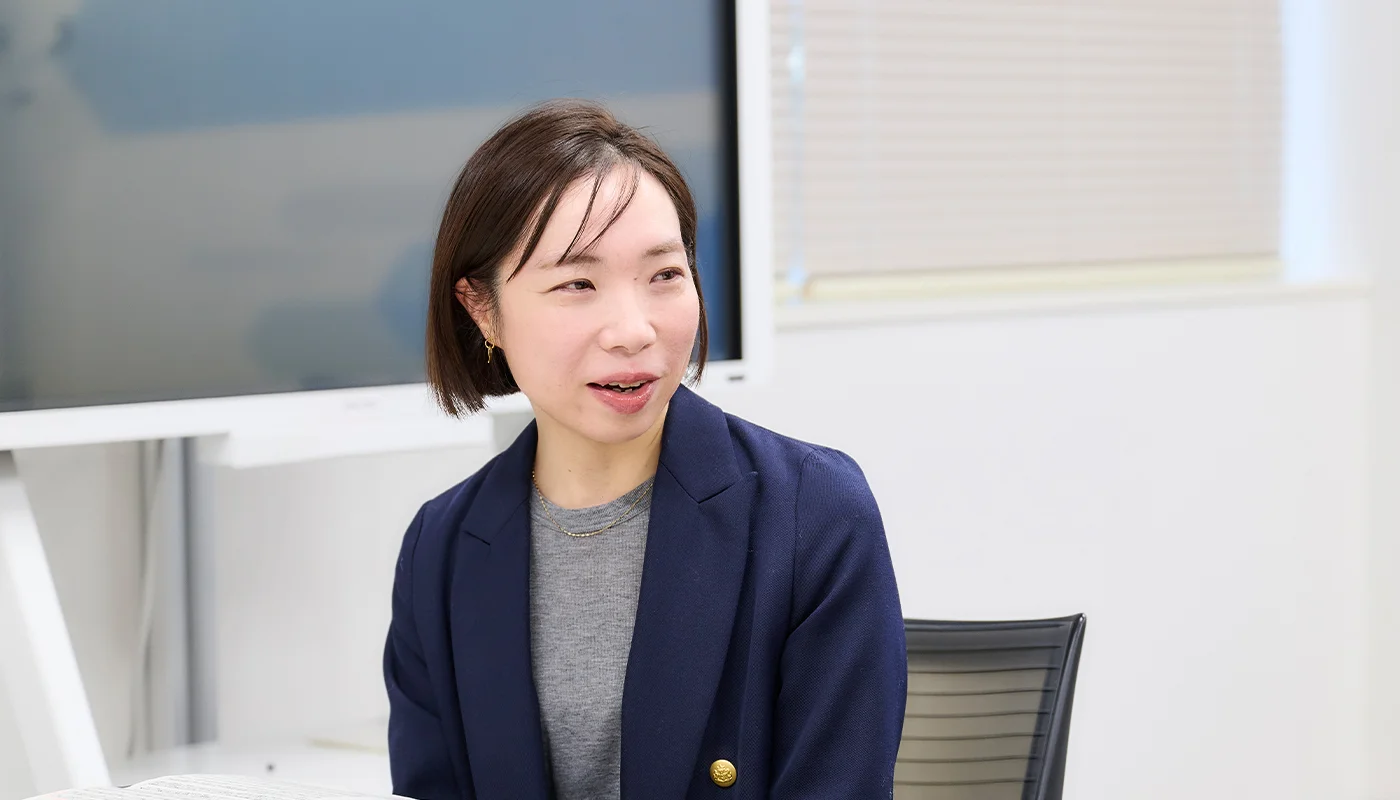
Kaori Hamada
ESG Strategy Division, ESG Center
Fujiyama:For the Technology, Intellectual Property, and Digital Strategies section, we made frontlines perspectives shine. CTO Yasuyuki Nomizu, together with our team, places great importance on experiential value. In interviewing people across the division we realized that this idea had taken root on the ground. We had Mr. Nomizu carefully explain it at the start of the section so people could understand it from the outset. I think that helped make the section easier to read.
We also changed how we asked for drafts. While space was limited, we asked contributors to write more than we expected to use and told them to include everything they wanted to say. That brought out perspectives and facts we had not captured before. We then worked with them to trim the drafts while keeping the key points. I think it was a great way to get input from the front lines.
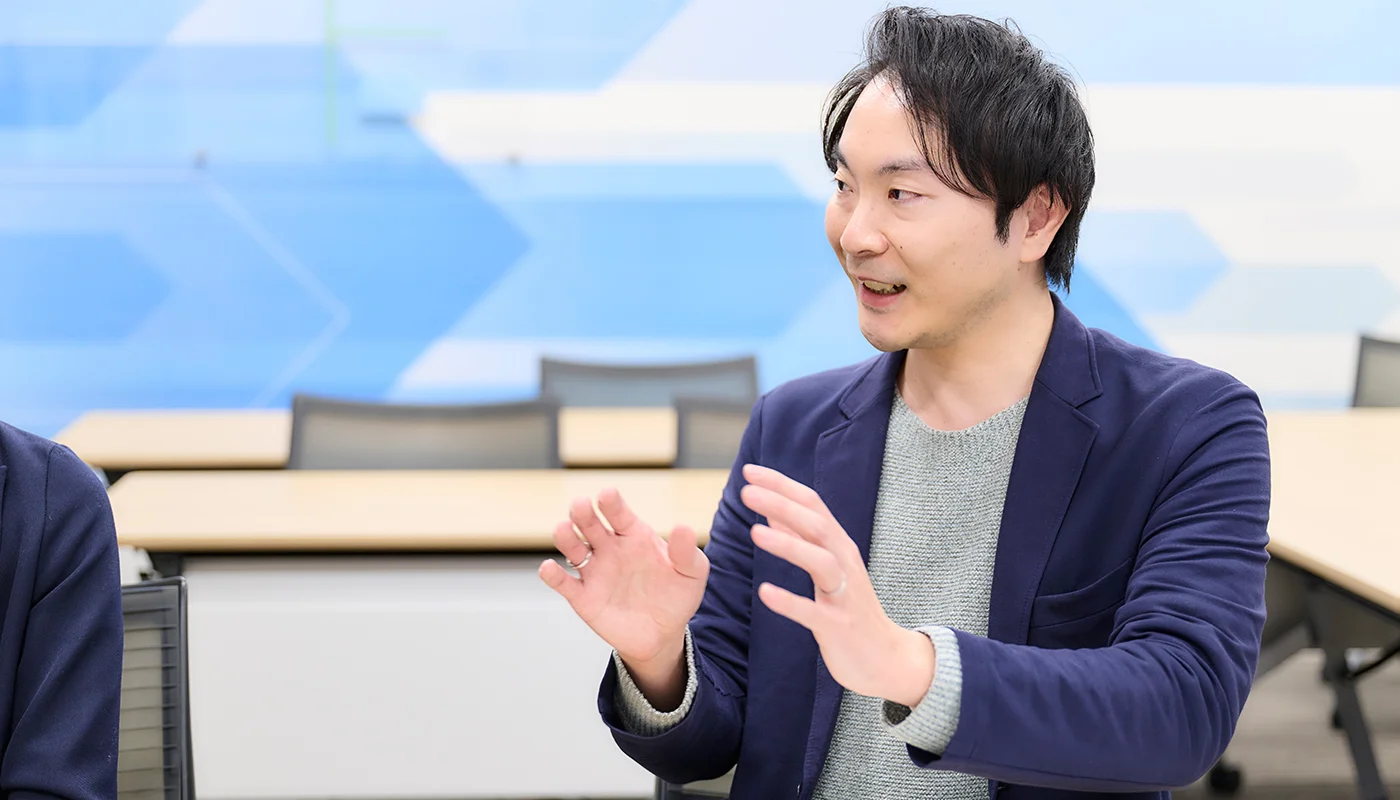
Ryotaro Fujiyama
Technology Management Department, Management
of Technology Center, Technology Management Division
——What did you learn from producing the Integrated Report?
Hamada:The feedback from investors on last year’s Integrated Report, which we heard during the production process, provided valuable insights that have been helpful in my day-to-day work. It reaffirmed the importance of providing information that supports investment decisions. We also recognized the need to clarify how current and future financial performance connect and better outline our growth strategy roadmap. I think these insights will help us enhance disclosure going forward.
Another takeaway from producing the Integrated Report was realizing that the entire Ricoh Group is moving in the same direction despite the diversity of our businesses.
Kogo:While we regularly share updates through news releases and other channels, there are surprisingly few chances to present Ricoh’s business activities so comprehensively. This report is a valuable annual opportunity to review our business as a whole and communicate it clearly. We should use it more effectively to engage internal and external stakeholders.
I learned a lot from working with frontlines teams and reflecting their perspectives in the Integrated Report. It reaffirmed RICOH Digital Services’ commitment to supporting clients and fostering their creativity and also made me rethink what value I should deliver through my work.
Fujiyama:I've worked on the Integrated Report for three years, and I see it as a clear annual guide to the company. We also use it quite a lot in public relations efforts, from preparing external presentation materials to responding to media inquiries and developing website content. The Ricoh data in the report is a key source for our communications. Since we start gathering information around May each year, we can also bring the latest updates into our day-to-day work early in the fiscal year, which helps a lot.
Sakamoto:Unlike a company profile, the Integrated Report goes beyond highlighting our strengths to address management challenges. Working on this project reminded how important it is as a disclosure tool.
Working with many departments and interviewing employees and customers in Japan and overseas reminded me how dedicated Ricoh Group employees are. It made the report’s message of “Showcasing individuals at the heart of Ricoh’s transformation” feel much more real. It also renewed my commitment to contribute to society through my work.
——How would you like the Integrated Report used internally and externally?
Kogo:The report covers every business and makes it clear where Ricoh is heading. I hope employees will find it as an easy way to learn what teams in other units do.
Hamada:Since the report focuses on core environmental and social aspects, I’d love readers to also go through the Sustainability Report to learn about our broader ESG initiatives.
Fujiyama:I see the report as a textbook employees can return to. It includes case studies and employee stories they may not see in their day-to-day work, and it can help people inside and outside Ricoh discover something new about it. I hope investors find it a good guide to where Ricoh is heading.
——What Fulfillment through Work have you gained from producing the Integrated Report?
Hamada:Feedback from readers is the most rewarding part of this work, and it keeps me motivated. From an ESG disclosure perspective, I want to use that feedback to drive improvements and enhance our disclosure. I want to continue listening closely to our stakeholders.
Fujiyama:I feel the same way. I find hearing how people respond to what we publish a major source of Fulfillment through Work. This year, we tried a new approach to get direct feedback on the Technology and Intellectual Property Strategy and Digital Strategy sections. We worked with an external partner and added questions to interviews with institutional investors. I’m looking forward to hearing what they think.
Kogo:I work in corporate planning at RICOH Digital Services, so I’m a bit removed from customer and manufacturing sites. That’s why producing the report meant a lot to me. It brought home the relationships Ricoh values with customers and where we’re heading. That experience led to Fulfillment through Work for me.
Sakamoto:Because we publish the report externally, it comes with real responsibility. We have to review every word and make sure it’s right. It also makes me feel that my work connects to society. That gives me a strong sense of purpose and Fulfillment through Work.