
 Global
Inkjet Technology for Printing Copper Conductive Patterns in Short Sintering Time under Ambient Conditions
Background
Electronic components have become an important foundation in our lives and economy and are indispensable for various advanced technologies, including those essential for smartphones, automobiles, medical devices, and AI.
In recent years, product life cycles have become even shorter, and to stay competitive, it has become necessary to keep up with design changes while quickly moving from the prototyping stage to the start of mass production. At the same time, geopolitical risks and other factors have exposed the fragmentation and instability of supply chains, leading to a growing interest in stable supply systems not dependent on specific regions or processes.
Furthermore, there is a strong need to reduce the environmental impact of electronic component manufacturing activities, which means reducing the use of resources and responsibly controlling the disposal of liquid and other waste materials.
Amid these growing demands in the electronic component manufacturing industry, Ricoh has reevaluated conventional multi-process manufacturing processes based on plating and etching, and we see great potential in printed electronics that can produce the functionality “where it is needed, and in the appropriate volume.” However, a major barrier to implementation and mass production has been the properties of copper, which is a versatile metal widely used in electronic components, but which loses its practical conductivity due to oxidation when sintered under ambient conditions (i.e., an environment where oxygen is present) after printing.
Solutions
Ricoh has developed a copper nanoparticle ink in collaboration with a material manufacturer and has optimized the discharge, drying, and sintering processes by utilizing its proprietary inkjet technology cultivated over many years. This technology allows the whole process for copper conductive patterns from printing to sintering to be completed under ambient conditions, enabling a simpler and more environmentally friendly patterning process not dependent on plating, etching, or other chemical processes. In addition to simplification of processes, it also facilitates implementation and improves productivity because it enables conductivity to be obtained quickly.
This technology allows direct printing on a variety of media (substrates) such as paper and PET film. It also enables free-form, flexible, and lightweight circuit formation. Potential applications include wearable devices, FPCs (Flexible Printed Circuits), RFID tags, and sensors for medical and robotic applications.
In addition, inkjet is a direct digital printing method that does not use printing plates. Since patterns can be formed directly from design data, the process can quickly follow design changes, streamlining the iterations of prototyping, evaluation, and plate revision. Another key feature of this technology is that it reduces the burden of setup compared to printing methods that use plates in high-mix, low-volume and short lead-time development processes.

Figure 1. Examples of copper conductive patterns created by inkjet printing
| No. | Application | Media | Dimensions |
|---|---|---|---|
| [1] | Conductive pattern for film devices | Polycarbonate | 30×30mm |
| [2] | FPC | Polyimide | Pattern line/Pattern space (L/S)=100/300µm |
| [3] | RFID antenna | Glassine paper | 70×14mm |
Technical highlights
1. Complete process from printing to sintering under ambient conditions
We have developed a copper nanoparticle inkjet ink in collaboration with a material manufacturer for printing and sintering under ambient conditions. By combining it with Ricoh's proprietary inkjet technology, which controls ink droplet volume and placement accuracy, and newly developed drying and sintering technology, we have achieved a copper patterning technology that can perform all processes from printing to sintering in series.
This technology can be expanded to other conductive materials, including silver ink, allowing it to serve as a foundational inkjet technology for patterning conductive materials into desired shapes.
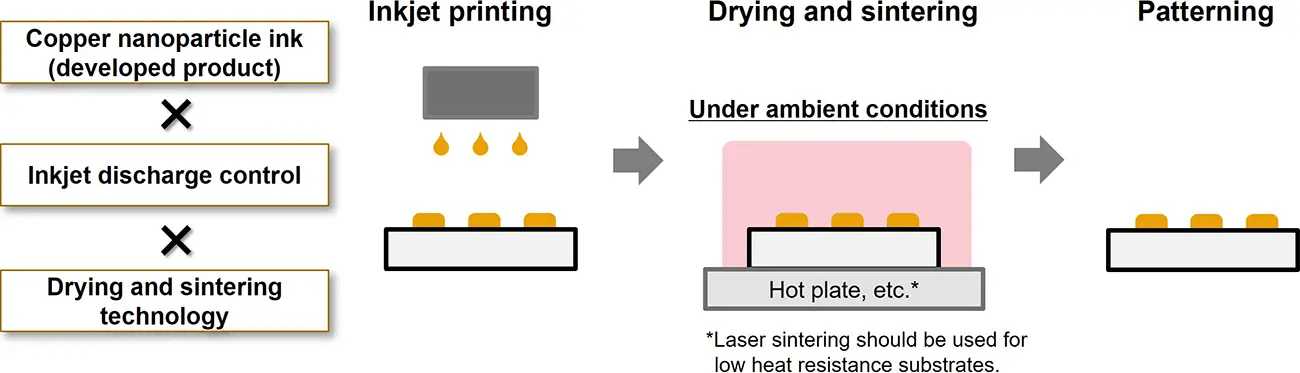
Figure 2. Patterning process using inkjet printing
2. Conductivity obtained with short-time sintering, with possible expansion to various media (substrates)
As a result of integrating and optimizing the ink design, drying, and sintering processes, we have confirmed that conductivity with a resistivity of less than 10 µΩ·cm can be obtained with a short-time sintering process at 250°C for 1 minute. The ability to provide conductivity in a short time allows patterning with high productivity.
Also, by designing the ink drying behavior and heat application method suitable for the substrate, the technology can be applied to paper or PET and other resin film substrates. Depending on substrate conditions, local heating methods such as laser sintering can be combined as auxiliary methods.
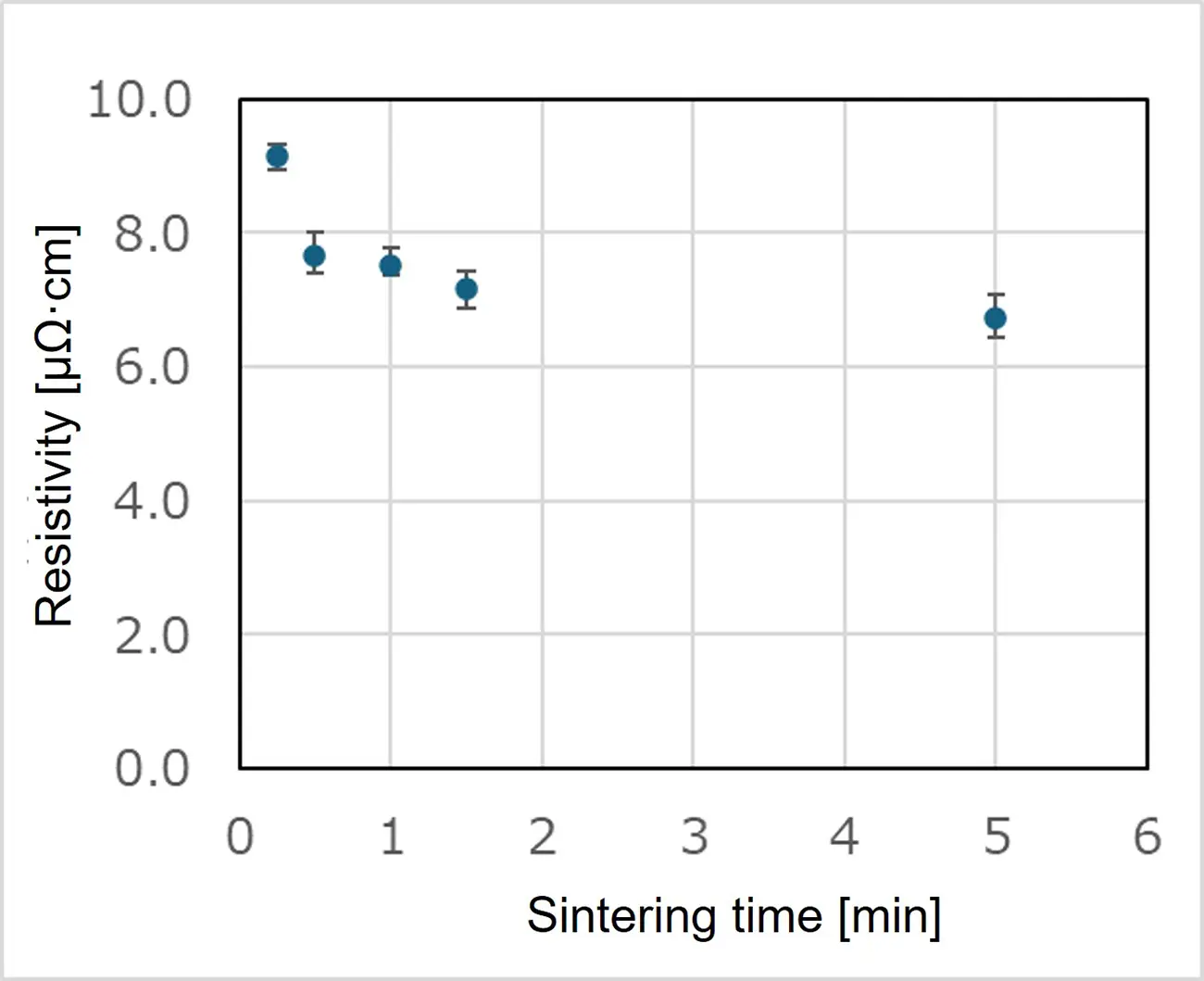
Figure 3. Sintering time and resistivity after inkjet printing
Sintering temperature: 250°C; Substrate: Polyimide
Thickness: Approx. 4µm
Ricoh's vision
Ricoh is utilizing the three key technologies of inkjet printhead technology, ink supply technology, and printing system technology that the company has cultivated over many years and is aiming to apply and expand these technologies to create new value with a “digital transformation in manufacturing” that changes the conventional wisdom.
This copper patterning technology has optimally combined the copper nanoparticle ink developed in collaboration with a material manufacturer with Ricoh's proprietary inkjet, drying, and sintering technologies. Particular attention was given to establishing a process usable in the manufacturing fields of electronic components. We believe that technology that does not rely on special equipment or complicated processes is not only easy to introduce, but that it also opens up a wide range of options for manufacturing itself.
Ricoh is committed to innovating processes centered on printing technology that contribute to both environmentally friendly manufacturing and improved development speed, and the Company will continue to work together with partners to promote social implementation of next-generation printed electronics.
We currently provide samples of this technology for various applications based on your inquiries. Your evaluation and feedback help us verify the effectiveness of the technology and expand its scope of application. We are also promoting co-creation with collaborative partners to demonstrate and jointly develop applications using this technology.
If you have any questions or inquiries about this technology, please send them to us using the “Contact Us” link at the bottom of this page.


