
 Global
Ultra-High Pressure Pulse Inkjet Printhead
Background
To realize a sustainable society, many industrial sectors must reduce emissions of volatile organic compounds (VOCs), which contribute to air pollution, while also reducing wastewater and energy consumption. Consequently, technologies that reduce environmental burdens by utilizing high-pressure processes that can significantly increase the efficiency of chemical reactions and substance conversions are attracting attention. However, there have been challenges in realizing such technologies. These include developing the means for precise control at high pressure and addressing the limited types of fluids that can be handled.
Solutions
Ricoh has developed a pulse inkjet printhead that can be used at ultra-high pressure and high temperature. This is a technological breakthrough because enabling fluid control under ultra-high pressure is a feat that previously proved difficult to achieve. Even under ultra-high pressure, the time required for the needle to retract and release the nozzle and extend again to close the nozzle (open time) can be controlled in short intervals, enabling control of the opening pressure speed and discharge. Digital control supports both drive condition settings and printhead health monitoring*.
In addition, because it supports ultra-high pressure, the printhead can handle a wide range of fluids and material states. It is also capable of discharging high-viscosity fluids and supercritical fluids, which was previously difficult to handle.
This allows high-viscosity materials and low-polarity solutes to be discharged without the use of solvents.
-
*Health monitoring: real-time monitoring of printhead conditions to maintain print quality
Material state that the printhead can handle
| Printhead | Maximum pressure | Maximum temperature | Viscosity |
|---|---|---|---|
| Industrial inkjet printhead (MH5420) | up to 0.1 MPa | up to 60°C | up to 12 cP |
| GELART JET printhead | up to 0.5 MPa | up to 35°C | up to 30 cP |
| Ultra-high pressure capable pulse inkjet printhead | up to 40 MPa | up to 250°C | up to 100,000 cP |
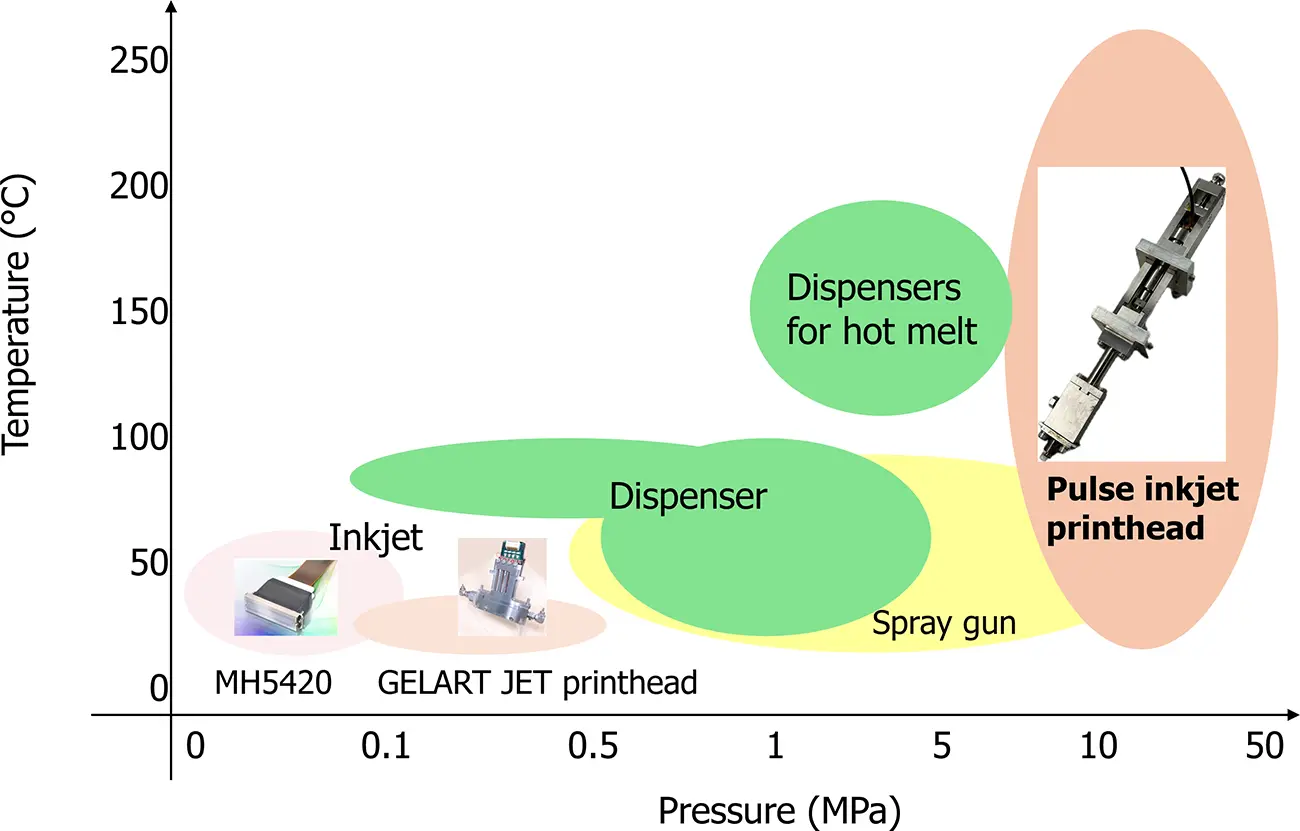
Temperature and pressure ranges supported by discharge mechanisms (Source: The SCEJ (Society of Chemical Engineers, Japan) 56th Autumn Meeting, Abstract PA215 (2025))
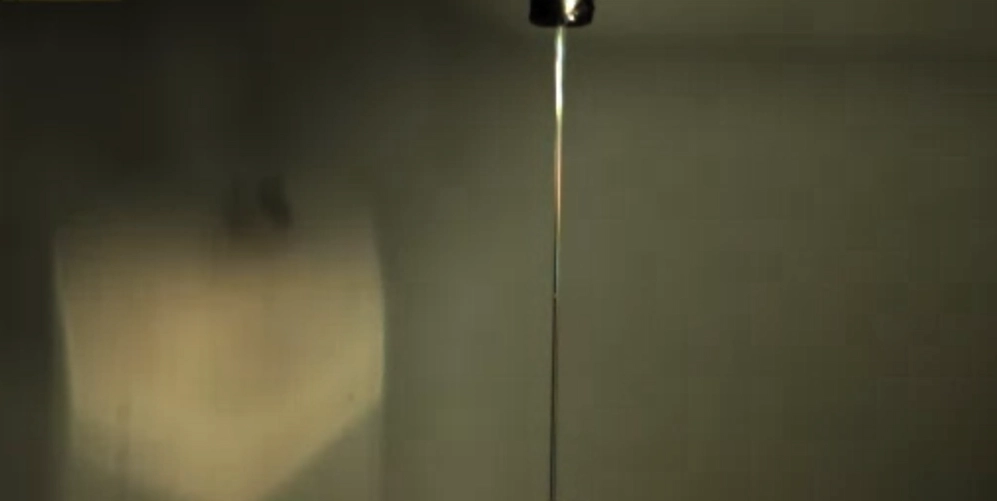

Video of glycerin discharge
Technical highlights
A mechanism that can withstand high temperature and high pressure is realized by mechanically assembling a piezo actuator with high generating force and a ceramic needle/tablet that can withstand the pressing force.
In addition, high material compatibility has been achieved by incorporating the following technologies.
Thermal independence of actuator
By installing a ceramic spacer with excellent heat insulation properties between the discharge and drive sections, the heat-sensitive actuator is made independent so the configuration can handle fluids with temperatures over 200°C.
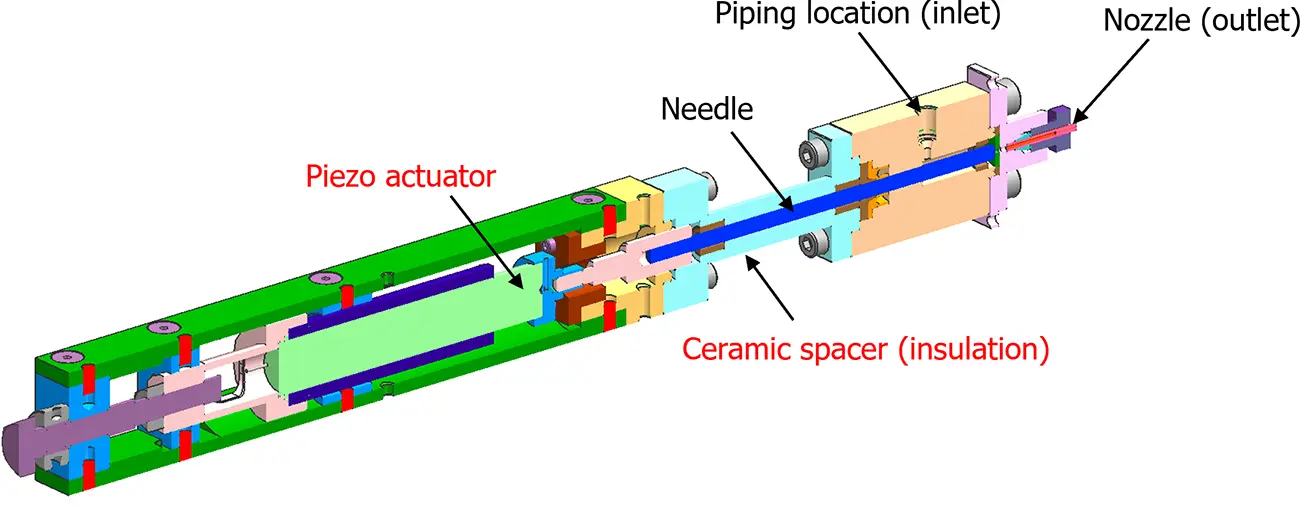
Printhead structure
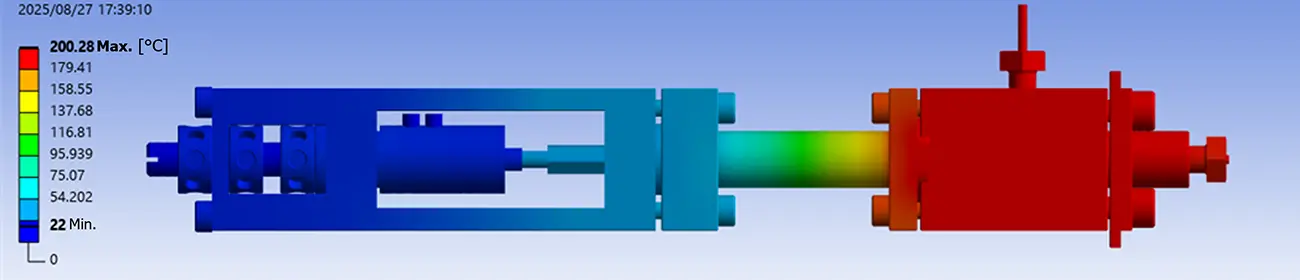
Thermal insulation simulation (Source: The SCEJ (Society of Chemical Engineers, Japan) 56th Autumn Meeting, Abstract PA215 (2025))
Technology preventing leaking caused by shaft misalignment due to the shape of the needle
To prevent ink from leaking out under ultra-high pressure and to seal to prevent foreign matter from entering from outside, a large force was required on the contact surface between the needle and the valve seat. But by optimizing the shape of the needle, sealing can now be done with a smaller force.
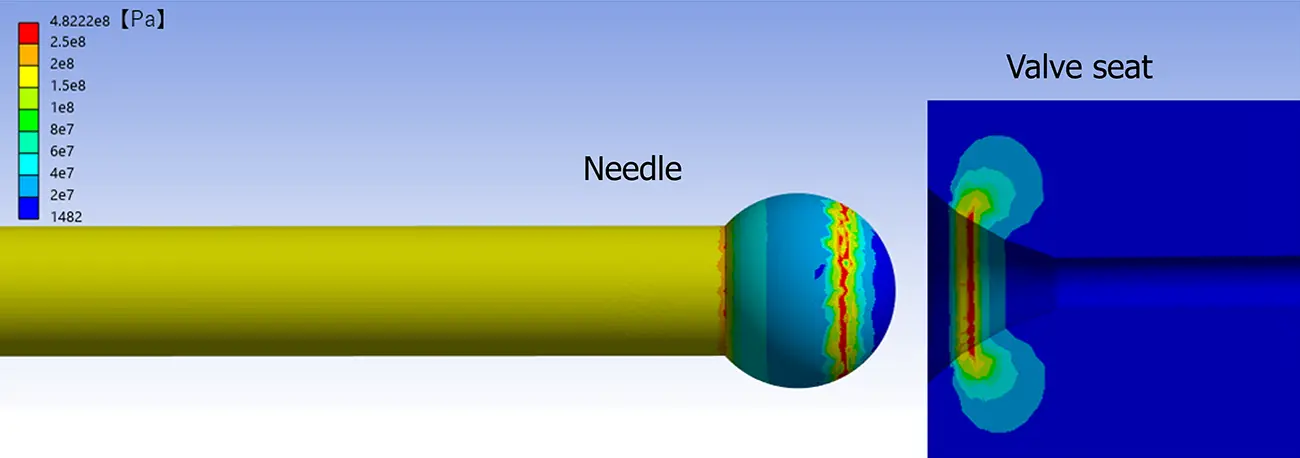
Needle contact force
Simulation technology for fluids under high pressure
By improving the contact force between the needle and the valve seat through structural analysis and simulating the flow through fluid analysis, it was confirmed that there are no problems with pressure loss, etc. This allowed for the optimization of the printhead structure.
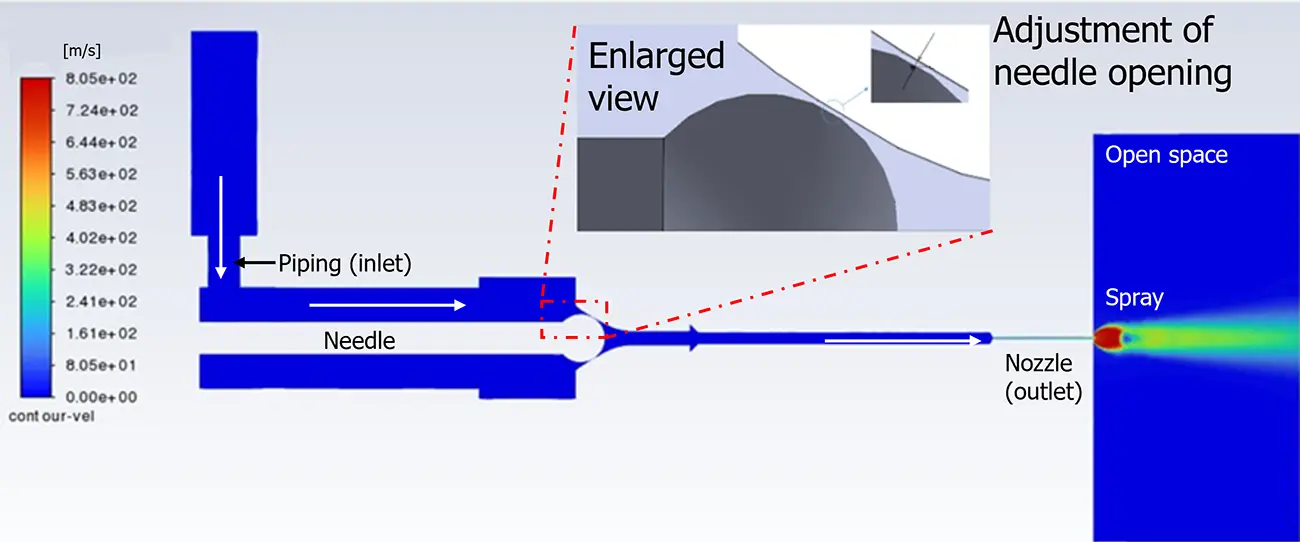
Flow velocity simulation
Material compatibility
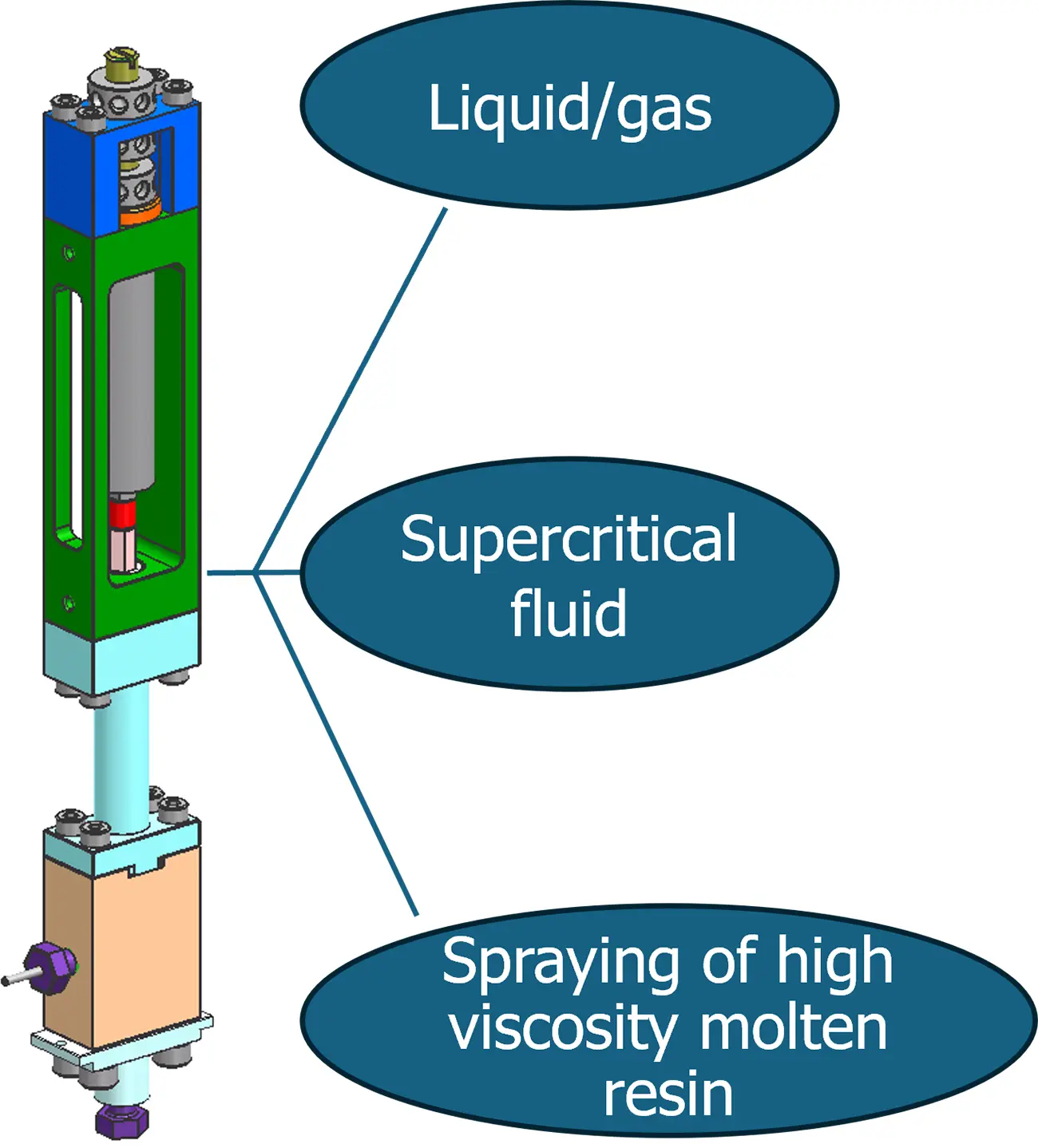
In addition to conventional water and solvents, high-pressure gases, molten resins, and even supercritical fluids can be discharged, making it suitable for a wide range of processes.

Spraying of high viscosity molten resin (polyester for toner)
35MPa,150°C
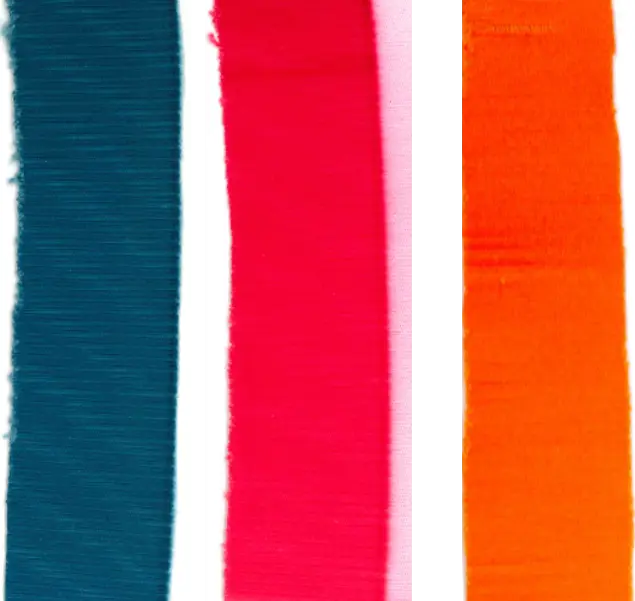
Disperse dyeing and spray dyeing with supercritical CO2
Ricoh's vision
By combining inkjet printhead technology developed over many years with material technologies, Ricoh is able to control a wide variety of fluids even under high pressure, enabling processes that were previously impossible such as the application of minute amounts of high-viscosity liquids and control of supercritical fluids.
In addition, digital control of high-pressure fluids reduces costs and environmental pollution by eliminating strain, waste, and unevenness, and improves the safety of working environments, thereby contributing to the realization of a sustainable society.


