
 Global
Ricoh Group Integrated Report 2026 Discussion with Outside Directors

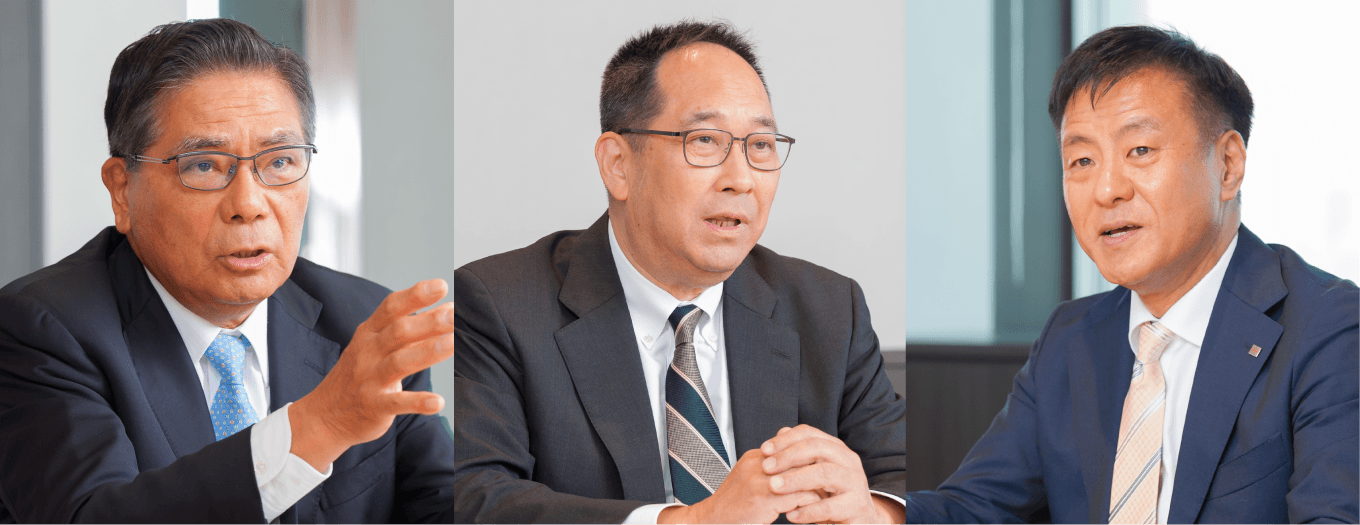
(Left to right)
Kazuhiko Ishimura
Chairperson of the Board of Directors
Outside Director
Shigenao Ishiguro
Lead Independent Director
Chairperson of the Nominating Committee
Outside Director
Moderator:
Tomohiro Umeda
Corporate Secretary
The Ricoh Group is continuously working to strengthen governance with the aim of enhancing corporate value. In April 2026, we established a Corporate Secretary position to better reflect constructive dialogue with the capital markets in the Company’s management and corporate governance and to further enhance the effectiveness of the Board of Directors. In this discussion, with Corporate Secretary Tomohiro Umeda serving as moderator, outside directors Kazuhiko Ishimura and Shigenao Ishiguro exchanged views on the role of the Board of Directors, issues identified through the review of the 21st Mid-Term Management Strategy, ways to improve effectiveness under Mid-Term Strategy ’26, and the future direction of the Company’s governance and oversight from an external perspective.
Role and Involvement of Outside Directors in the New Structure
Umeda: Today, I will serve as the moderator for this discussion. As the Corporate Secretary, I am responsible for planning and managing initiatives to improve governance and the effectiveness of the Board of Directors, as well as to enhance decision making and oversight functions. We recognize that, particularly in light of capital market assessments, the role expected of the Board is becoming increasingly important. Today, I hope to facilitate an open conversation and hear frank opinions from both of you.
First, let’s discuss the new structure. In June, Mr. Ishimura, you were appointed Chairperson of the Board of Directors, and Mr. Ishiguro, you were appointed Lead Independent Director and Chairperson of the Nominating Committee. What are your views on Ricoh’s Board of Directors and corporate governance, including any issues you believe should be addressed?
Ishimura: Ricoh’s governance is well thought out overall and functions effectively. The Board has mechanisms in place to fairly elicit a wide range of views from both inside and outside the Company and reflect them in decision making. In the Board discussions, everyone exchanges candid and unreserved opinions. Board meetings are characterized by an open atmosphere that encourages serious discussion, and the Company’s executives take the Board’s discussions seriously. I see this attitude reflected in the culture of the Board and consider it a unique strength of Ricoh. As Chairperson, I want to deepen this foundation and further enhance the quality of discussions. I will support the Board so that each member maintains an appropriate sense of constructive tension, thinks proactively, and makes decisions responsibly.
Ishiguro: As the Lead Independent Director, I do not intend to overstep my role by coordinating more than necessary. On the other hand, I believe it is important to clearly demonstrate the significance and role of outside directors and to take initiative. To that end, I recognize that it is my responsibility to create a foundation where each director can speak freely and candidly based on their own sense of the issues. Also, as Chairperson of the Nominating Committee, it is essential that I take an overall view not only of the appointment and dismissal of the President but also of whether the entire executive structure is functioning appropriately. As chair of the committee, I want to make clear that my role is not limited to personnel matters; I want to focus on how to energize the executive organization and strengthen the Company’s management capabilities.
Umeda: Ricoh’s outside directors have thus far spearheaded improvements in the effectiveness of governance and the Board of Directors. To put it directly, I believe one of the Corporate Secretary’s important roles is to support Board operations in a way that enables outside directors to function as effectively as possible.
Ricoh’s Current Challenges (Review of the 21st Mid-Term Management Strategy)
Umeda: Next, I would like to ask you to look back on the 21st Mid-Term Management Strategy (fiscal 2023-2025). This year’s Board effectiveness assessment also prompted a wide range of discussions. How would you evaluate the past three years? Also, from the perspectives of corporate value and capital profitability, how do you think we should meet the expectations of shareholders and investors?
Ishimura: The Board takes very seriously the fact that the Company failed to achieve the financial targets of the 21st Mid-Term Management Strategy and was unable to meet the expectations of shareholders and investors in terms of earnings and capital profitability. In Mid-Term Strategy ’26, we have focused our discussions on improving capital profitability. Ricoh must generate earnings that meet the expectations of shareholders and investors as soon as possible and fulfill its responsibilities.
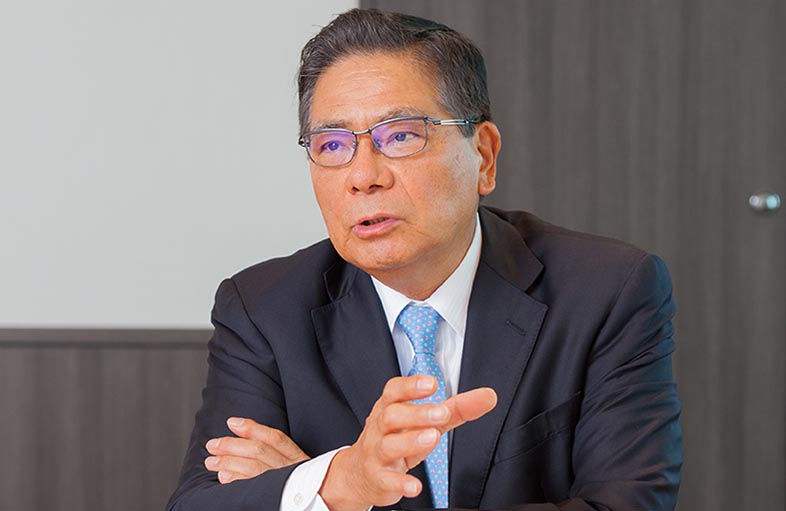
Ishiguro: I feel the same way. The failure to achieve the financial targets of the 21st Mid-Term Management Strategy and the prolonged period of ROE falling below the cost of shareholders’ equity are the Board’s biggest concerns and challenges, and something we need to seriously address as outside directors. Looking back, a major point of reflection is that Ricoh was not able to fully present a clear path to new growth. Confidence in growth can be a driving force for achieving our plans. At the same time, not everything fell short. Initiatives to support the Company’s earnings base have steadily progressed, including the Corporate Value Improvement Project, fixed cost reductions, promotion of reskilling, strengthening of development capabilities and production systems in the Office Printing domain through ETRIA, and a comprehensive review of incentive programs. Going forward, the ability to translate this foundation into tangible results will be crucial.
Umeda: Since October 2024, the review of incentive programs has been carried out by a joint committee comprising members of the Nominating Committee and the Compensation Committee. This initiative has been led primarily by outside directors. Mr. Ishiguro, you led the reforms as Chairperson of the Nominating Committee. What was your perspective at that time?
Ishiguro: After taking over as chair from Mr. Ishimura, I worked to review executive positions and the evaluation system. I was also involved in reviewing the compensation system as a member of the Compensation Committee. In our discussions, the committee members shared the view that the Board should take responsibility and advance governance reforms that lead to improving corporate value. Because we believed that a broad review of management as a whole was necessary, not just the evaluation and compensation of the management team, we also reviewed the executive structure and the executive officer system. Enhancing management capabilities and execution is essential to improving corporate value. Regarding compensation, Mr. Tani, the Chairperson of the Compensation Committee, took the lead in reviewing the design of compensation linked to corporate value and ROE. The new system thoroughly incorporated the perspectives of shareholders and investors, including the introduction of restricted stock units (RSUs) that are not linked to performance not only for executives but also for outside directors.
Ishimura: In the 21st Mid-Term Management Strategy, the Company pressed ahead with its transformation into a digital services company. I believe that direction itself is the right one. However, the Board has repeatedly engaged in tough discussions on whether such offerings are growing as key revenue sources and whether progress is being made fast enough. Through discussions over the past three years, it has become clear that the way digital services are provided varies depending on market characteristics. We have also shared the recognition that optimal approaches and systems tailored to the local situation of each region—Japan, Europe, the U.S., and others—are necessary. For the benefit of shareholders and investors, it is important not only to indicate the direction the Company is heading in, but also to build a track record and clearly show that progress is being made. In my view, that is what leads to trust.
Effectiveness of the Board of Directors
Umeda: The Board has continued to discuss, with a strong sense of urgency, the fact that Ricoh has not fully met the expectations of shareholders and investors. Your active discussions have shown me your commitment to analyzing the root causes and identifying appropriate actions. Based on the reflections so far, how do you view the current state of discussions and oversight by the Board of Directors?
Ishimura: The Board has continued to discuss which business areas the Company should focus on for its transformation into a digital services company. What are Ricoh’s strengths? What is the strategic significance of these efforts? How can it differentiate itself? Which resources should it leverage to build a competitive advantage? These are the fundamental questions we have repeatedly raised during Board meetings. We expect the Company’s executives to provide accurate analysis and clear explanations. On the other hand, I believe the Board must take responsibility for deciding which areas to invest in for future growth. What is important here is to make the earnings structure and growth areas visible and establish a framework for continuously verifying the validity of the strategy. In Mid-Term Strategy ’26, I recognize that the Board is required to conduct more in-depth monitoring than before and encourage the Company to make agile strategic adjustments as needed.
Ishiguro: As Mr. Ishimura mentioned, significant progress has been made in Mid-Term Strategy ’26 in terms of examining businesses more closely. This is because we examined strategies at the intersection of the business and regional axes and engaged in detailed discussions on strategies and organizational frameworks. However, more in-depth analysis will be needed going forward. It will be important to clarify with greater detail which areas we should invest in and what results can be expected from the investments, as well as which businesses will generate cash flow. The Office Printing business has been a powerful success model centered on multifunction printers (MFPs), but going forward, management will need to assess growth potential and profitability across multiple combinations of businesses and regions, and then optimize strategies and organizational structures with agility. Based on this recognition, a rolling approach to strategy was adopted in Mid-Term Strategy ’26. I also believe it is important for the Board to further enhance the effectiveness of portfolio management by working with the executive team as needed to run a cycle of strategy verification.
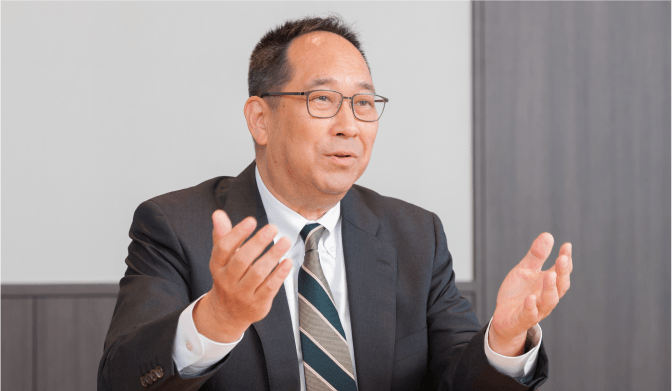
Umeda: The Board has engaged in fairly in-depth discussions on the earnings structure of growth areas and the appropriateness of investments. That said, some areas have not yet been fully clarified, so more detailed organization and analysis of information will be indispensable in the future.
Objectives of Mid-Term Strategy ’26
Umeda: What kind of transformation do you think Ricoh needs moving forward? The Company’s business segments and global sales structure were largely overhauled this time. Since last fiscal year, the Board has also spent considerable time discussing these management structures. With the execution of Mid-Term Strategy ’26 under this new structure, please share your thoughts on the kind of oversight required of the Board of Directors.
Ishimura: What will be important in Mid-Term Strategy ’26 is how to effectively execute regional strategies. Ricoh’s strength lies in the customer base it has cultivated so far and its organizational capability to operate globally. However, differentiating with digital services alone will be no easy feat. Precisely for that reason, it is important to build optimal business models tailored to the market characteristics of each region and to quickly verify their effectiveness. I believe the results of these efforts will become apparent at a relatively early stage. From the Board’s perspective, we will look to continuously monitor established KPIs and appropriately assess the validity of strategies based on the results.
Ishiguro: What is important going forward is, first, to maintain and strengthen the earning power of the Office Printing business as much as possible. If this falters, it will place limitations on the investment capacity for new growth. The Board will closely monitor the state of the business from the perspectives of overall market contraction risk and the Company’s positioning within that market. On top of that, carefully assessing growth areas will be key. Given that differentiation in the digital space is not always easy, rather than covering all aspects with a single business model, the Company will need to provide optimal value according to each region and customer based on its relationships with customers. To that end, when evaluating business progress, the Company will assess growth potential and profitability at a more granular level.
Umeda: In Mid-Term Strategy ’26, we are advancing strategies and execution along the two axes of business and region to expand recurring earnings. The Board is required to verify strategies through monitoring based on KPIs and to make agile course corrections as necessary. I personally hope to support both the quality and speed of discussions by visualizing information and clarifying the key points.
Dialogue with the Capital Markets
Umeda: At Board meetings, each director engages in frank discussions with a strong sense of urgency. I have also actively shared the candid views received from shareholders and investors with the Board. What do you perceive to be the current challenges in meeting the expectations of shareholders and investors? Also, what indicators or changes do you think are important for the capital markets to recognize that Ricoh has changed?
Ishimura: When it comes to the capital markets, nothing is more important than demonstrating results. Many shareholders and investors have shown a certain degree of understanding of Ricoh’s aim to transform into a digital services company. On the other hand, they may still be concerned that Ricoh has not yet demonstrated sufficient results. For this very reason, it is imperative that the Company demonstrates not only the direction it is heading in, but also concrete results. Changes in the business portfolio will be key for the capital markets to recognize that Ricoh has changed. In addition to increasing the share of recurring earnings in growth areas such as Workplace Services, the Company needs to continuously demonstrate how its earnings structure is changing in each region. Ricoh’s capital structure will also change as it achieves stable earnings growth globally. Through these efforts, it must achieve ROE that consistently exceeds the cost of shareholders’ equity and earn the trust of the capital markets. Recently, the Company added another director to the Board, Ms. Reiko Hayashi, who has extensive experience and knowledge of the capital markets. As Chairperson, I feel that Board discussions have become even more substantive by incorporating the perspectives of shareholders and investors.
Ishiguro: In Ricoh’s relationship with the capital markets, what matters is not only how shareholders and investors view the Company—it is also important for Ricoh itself to clearly communicate the vision Ricoh is pursuing and the future it aims to realize. On top of that, the Company must communicate not in language understood only internally, but in terms that are accessible to the capital markets and society at large. My understanding is that independent outside directors stand at the intersection where capital-driven investors and people-driven management meet. That is exactly why Ricoh needs to focus on how to revitalize relationships not only with shareholders and investors, but also with a wide range of stakeholders, including employees and business partners, and translate those relationships into value creation. In Mid-Term Strategy ’26, I am convinced that the results of the Company’s transformation will be reflected in corporate value and shareholder value through stronger earnings in growth areas, improved ROE, and faster management decision-making.
Umeda: In this year’s Board effectiveness assessment, there was also discussion about how the Board should engage more closely with stakeholders. Ricoh’s Board of Directors must not become distant from the capital markets. I believe it is important to enhance transparency, reflect the insights and suggestions obtained from dialogue with shareholders and investors in management and governance, and communicate the outcomes of those efforts appropriately.
Key Points to Focus on Going Forward
Umeda: Next, what areas do you particularly want to focus on and address in fiscal 2026 and beyond as Chairperson of the Board of Directors (Mr. Ishimura) and as Lead Independent Director and Chairperson of the Nominating Committee (Mr. Ishiguro)?
Ishimura: As Chairperson of the Board, I want to ensure that the Board always shares the fundamental purpose of enhancing corporate value and shareholder value. Moreover, I will emphasize, more than anything else, the creation of a forum where open and honest discussions can take place. However, that alone is not enough. From now on, it is imperative that Ricoh transforms into a company that delivers on its commitments. Given that Ricoh has continued to fall short of its mid-term targets, it now must steadily execute its stated policies and turn them into concrete results. For that to happen, it must further enhance its execution capabilities. From the Board’s point of view, we will maintain the right level of tension while firmly supporting the Company’s transformation.
Ishiguro: My focus is on achieving strong execution. I believe that strong management is rooted in strong execution. A management team that can accurately analyze the current situation, propose targeted actions, and execute them swiftly is vital. I also want Ricoh to be an organization that can generate excellent ideas from a broad range of opinions. As part of the recent reforms, the Company has reviewed its management structure and established a system where corporate officers and executive officers engage with each other with a healthy sense of tension. Corporate officers discuss issues from the perspective of overall optimization, while executive officers do so to achieve business strategies. I believe that advancing mutual understanding in these discussions leads to improved execution capabilities. Ricoh has also put in place a framework under which each officer can devote their undivided attention to their respective execution responsibilities. This framework is also used to rigorously evaluate their performance. I believe this continuously strengthens management and contributes to increased motivation toward achieving targets.
Umeda: Strengthening execution is an area that both of you have consistently emphasized while leading reforms. From the establishment of advisory bodies supporting the CEO’s strategy formulation to the design of performance evaluation and compensation, a comprehensive review has been carried out with the aim of enhancing corporate value. Going forward, reliably managing these initiatives and using them to strengthen Ricoh’s management capabilities will be key. As Corporate Secretary, I will also support the Board in providing proper oversight so that these measures function effectively.
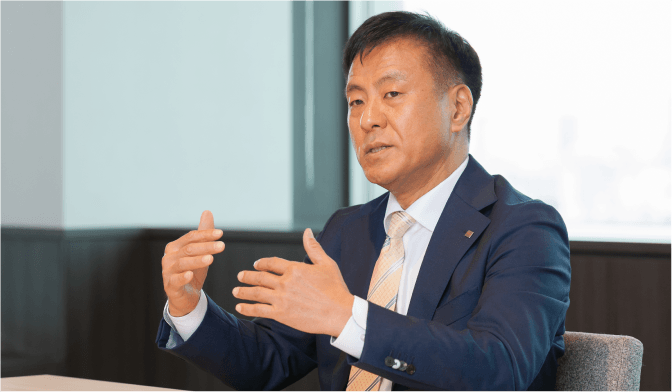
Role of the Corporate Secretary
As a position that reports directly to the Board of Directors, the Corporate Secretary supports smooth communication among the capital markets, the Board of Directors, and the advisory committees. In addition, by organizing and analyzing the medium- to long-term expectations and concerns of the capital markets and reflecting them in management and corporate governance, the Corporate Secretary works to improve the quality of the Board’s discussions and decision making, enhance governance, and improve the transparency and reliability of management.
Expectations for Ricoh Going Forward
Umeda: Finally, I would like to ask about your site visits and dialogues with employees. How have these activities influenced your understanding of Ricoh and discussions at Board meetings? Based on that, please share your impressions and expectations regarding Ricoh’s growth potential.
Ishimura: When I visit the Company’s research centers, factories, and companies Ricoh has acquired, I strongly feel that the Ricoh Group has many employees with high levels of expertise and enthusiasm. What is also impressive is that when I talk to employees, they openly and passionately express their opinions. At ETRIA as well, I sensed a strong capacity for execution, supported by a precise understanding of frontline challenges and a shared recognition of the themes and directions to be addressed going forward. In addition to a strong awareness of ESG and recycling, I observed a proactive attitude toward pursuing reforms, such as factory improvements using AI. These frontline capabilities are a real strength of Ricoh. If Ricoh can translate these frontline capabilities into new business creation, I believe it has significant potential for growth.
Ishiguro: I also feel that Ricoh’s employees are highly skilled and that there are many talented individuals. At the same time, I get the impression that there are many sincere and capable people. I think Ricoh would benefit from creating healthier competitive environments and more opportunities where a diverse workforce can thrive. This point is also reflected in the discussions on Mid-Term Strategy ’26. Also, among the initiatives each employee routinely engages in, many of them appear to be quite socially significant from an outsider’s point of view and could be highlighted as major strengths. One of the important roles of outside directors is to identify such value and articulate it in a way that resonates with the capital markets. Ricoh is currently driving the transformation of its business structure toward new growth areas, based on the strengths it has cultivated in businesses centered on MFPs. This means entering a stage where each employee’s abilities and potential can be expressed in more diverse ways than ever before. This represents both a significant challenge and an opportunity for employees. Employees are the driving force of transformation. I believe that creating an environment that brings out that power is a key role of management.
Umeda: Today’s discussion left me with the strong impression that both of you see new growth potential for Ricoh. Reflecting in management the insights gained through dialogue with shareholders and investors, enabling each employee to fully demonstrate their strengths, and creating an environment where those strengths can be brought together—these are, I felt, the essence of Ricoh’s approach to governance and to enhancing corporate value through collaboration with stakeholders. Thank you for your candid and valuable insights today.
Message from a Newly Appointed Outside Director
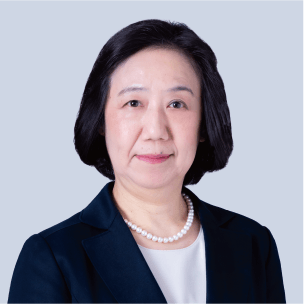
Reiko Hayashi
Outside Director
Uncertainty in the social and economic environment is higher than ever. Even in the midst of this, I believe that continuing to practice the Ricoh Way, based on the Spirit of Three Loves with the aim of realizing “Fulfillment through Work,” will serve as the foundation for enhancing corporate value.
Currently, the Ricoh Group is pressing ahead with a structural transformation to become the leading global integrator of the customer’s workplace. Now, as technologies such as generative AI become more widespread, it is crucial that Ricoh leverages its strengths, including a customer base of approximately 1.4 million companies, global customer touchpoints, and accumulated intellectual property. By building the workplace of the future together with customers and steadily advancing structural transformation and value creation, the Company is expected to strengthen its competitiveness and profitability.
The path of transformation is by no means easy. However, I am confident that the Ricoh Group will deliver results by working together and continuing to make the right investments and management decisions.
I have been engaged in capital markets business and sustainable finance for many years at global financial institutions. Drawing on this experience, I will objectively identify the challenges faced by the Ricoh Group and their root causes, and as an outside director, actively provide advice to help strengthen corporate governance, earn the trust of stakeholders, and enhance corporate value over the medium to long term.
