
 Global

Taking measures for biodiversity conservation Biodiversity Conservation
Policy/Basic Concept
Our human society is heavily dependent on the various benefits provided by the ecosystems on the earth, and biodiversity is closely related to these ecosystems. However, we are now losing biodiversity at an unprecedented and rapid pace due to the deterioration of the natural environment. Companies are required to assess the impact of their business activities on ecosystems, prevent the loss of biodiversity, and contribute to its restoration.
The Ricoh Group established the "Biodiversity Policy" in 2009, approved by the Management Committee, believing that the conservation of biodiversity would lead to the creation of a truly affluent and sustainable society. Furthermore, in 2010, we established the " Regulations on Wood Raw Materials for Ricoh Group Products" (an expansion of the "Environmental Regulations on Procurement of Paper Products" established in 2003) to prevent deforestation and to procure raw materials with due consideration for social aspects such as labor. In addition, in 2020, we set a goal of increasing the number of trees by 1 million by 2030 through forest conservation activities that both "conserve" and "increase" the number of forests. Based on these policies and regulations, we are working with various stakeholders to reduce the environmental impact of our business activities, at the same time, we are promoting efforts to maintain and enhance the regenerative capacity of the earth.
The Ricoh Group aims to realize a "nature positive" and "zero deforestation" society that halts the loss of biodiversity and puts it on a recovery track by 2030. To this end, we are working to understand biodiversity risks and reduce the environmental impact of our business activities in cooperation with various stakeholders, including suppliers, while at the same time maintaining and improving the Earth's regenerative capacity.
Biodiversity Policy
Basic Policy
We recognize that while we enjoy the benefits of biodiversity, our business activities also have an impact on it. As such, we actively work towards realizing a society living in harmony with nature. We also work on the conservation of biodiversity, with the understanding that biodiversity, climate change, and resource use all mutually influence each other.
 Ricoh Group Biodiversity Policy
Regulations for Ricoh Group products made of wood
From the viewpoint of global environmental conservation and biodiversity protection, this provision must be established to confirm that the wood raw materials used in Ricoh brand products and their accessories are legally obtained with consideration for the sustainability of the place of origin in environmental and social aspects prior to the decision of procurement.
Scope of Regulation
It shall apply to the following items that are made from wood procured by the Ricoh Group:
- Paper (PPC paper, thermal paper, etc.)
- Items accompanying with Ricoh Group brand products (stickers, manuals, packaging material, cushion material, etc.).
Requirements for raw materials provided by suppliers
Confirmation of legality of wood in the country of origin at the time of production.
Wood produced from a forest where sustainable forest management is practiced without adverse environmental or social impact at the time of production.
The products delivered to the Ricoh Group do not use wood procured by a "Supplier with Problems."
Scope and requirements of Regulations for Ricoh Group products made of wood
Paper Procurement Policy
The policy is based on two criteria: "Paper* Standards" and "Supplier Standards."
Paper Standards(Requirements to procure paper)
- Paper must be produced from forests that are managed in a sustainable manner and the legality of which has been verified.
- Paper must not be produced from forests with high conservation value.
- Virgin paper/recycled paper must have traceability.
- Chemical substances used in production process of paper must be confirmed to be safe.
- Environmental and safety management must be under control in the paper manufacturing process (including wastewater and other water management).
- The paper must be ECF chlorine-free bleached paper.
Supplier Standards(Requirements for procurement transactions)
- Suppliers must comply with the laws and regulations of the region and country in which they operate, and they must conduct their operations and supply products with consideration for the environment, including climate change prevention, appropriate use of resources, and biodiversity conservation.
- Human rights of local residents in the area where the company operates are protected and that the company sustains a good relationship with local residents.
- Human rights of workers and employees are protected and there is no relationship with antisocial forces or groups.
*Target: PPC paper, paper rolls
 Paper Procurement Policy
Structures/Systems
To continuously discuss mid- to long-term issues of the Ricoh Group in the areas of environment, society, and governance at the management level, the ESG Committee, chaired by the CEO, was established in May 2018. The committee meets once every quarter with the participation of Senior Management to discuss the status of initiatives, issues, and investment decisions related to ESG themes, such as biodiversity initiatives, as important themes for management. Its deliberations are regularly reported to the Board of Directors, which then supervises the execution of ESG activities at a high level.
Structure and Systems-ESG Committee
Impact and risk assessment for biodiversity
The Ricoh Group has adopted the following basic processes to ensure that biodiversity is properly considered.
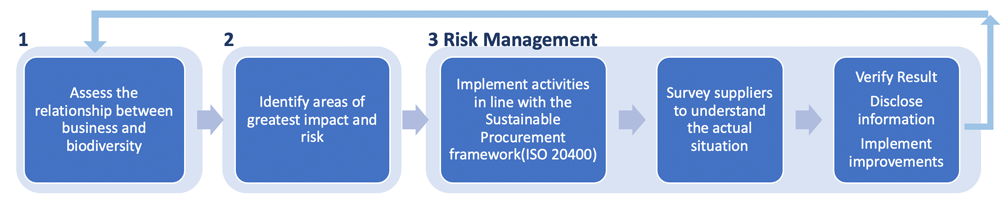
1) Assess the relationship between our business and biodiversity
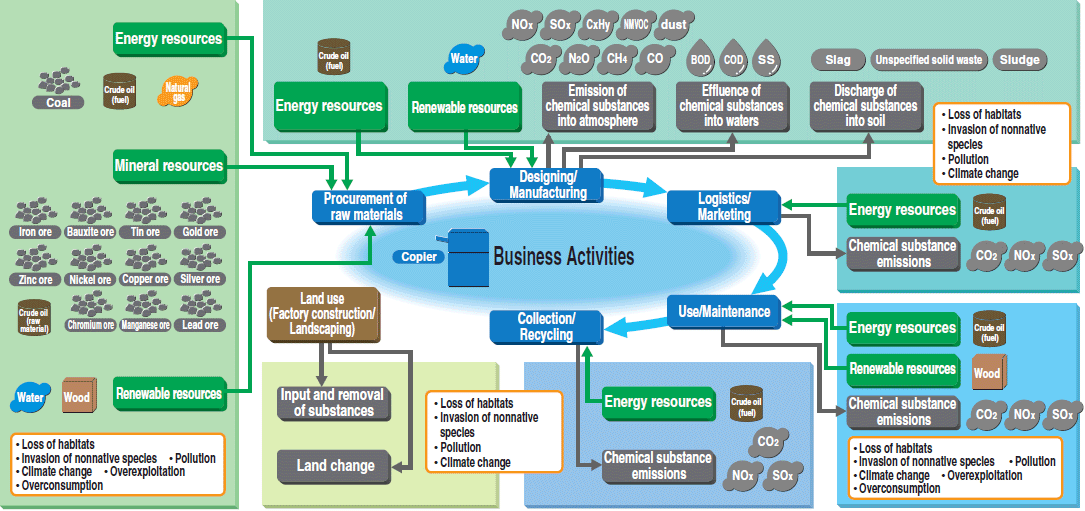
We promote biodiversity-conscious activities by clarifying the relationship between our business activities and ecosystems (environmental impacts and risks). To clarify the relationship between business activities and ecosystems, the Ricoh Group has created a "Map of relationships between business and biodiversity" to show the relationship between product life cycles, land use, and other factors and ecosystems.
Target Businesses: Imaging Business, Thermal Business
Target Stage: Procurement of raw materials, design and manufacturing, transportation and sales, use and maintenance, collection and recycling, from upstream to own operations and downstream
Target Data: Energy resources, mineral resources, renewable resources, chemical emissions to air, water, and soil, land use
Target Areas:Own operation areas and adjacent areas
*Individual business sites are also evaluated based on the 30 by 30 criteria for certification as a site in harmony with nature.
Map of Relationships between businesses and biodiversity
2) Identify areas of greatest impact and risk
As a result of the evaluation of the relationship between business and biodiversity, paper procurement accounted for the majority of the evaluation results in the supply chain, indicating that the procurement of raw materials such as pulp and paper has a large impact and risk on ecosystems.
3) Risk Management
To reduce environmental impact, we promote the use of recycled paper and recycled materials, and at the same time, we procure raw materials in consideration of biodiversity in cooperation with our business units and stakeholders (Chart 1). The Ricoh Group assesses the impact and risks on biodiversity and the results of countermeasures as needed and reviews the countermeasures.
Risks are managed through a company-wide risk management system.
Risk Management
Biodiversity dependencies and impacts assessment.
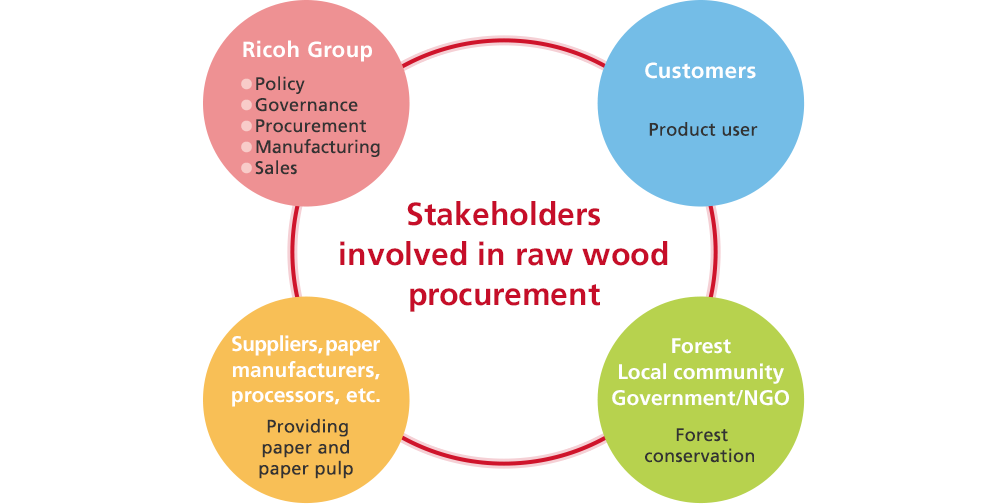
[Chart 1] Stakeholders and Roles Related to "Regulations for Ricoh Group products made of wood"
Targets and Performance
Target for forest conservation
Planting another one million new trees(FY2020 - 2030)
| Performance | FY 2021 | FY 2022 | FY 2023 | FY 2024 |
|---|---|---|---|---|
| Number of trees planted: a year (K Trees) |
149 | 97 | 115 | 78 |
| Number of trees planted: Cumulative total (K Trees) |
241 | 338 | 453 | 531 |
| Progress (%) | 24.1 | 33.8 | 45.3 | 53.1 |
Target for zero deforestation
Sustainable procurement of paper: 100% by FY2026
| Performance | FY 2023 | FY 2024 |
|---|---|---|
| Sustainable procurement of paper rate(%)* | 60 | 90 |
※Percentage of paper which meet the standards of Ricoh's original certification (based on weight).
Ricoh's original certification
Additional Information: Forest certification rate
Number of main suppliers with a forest certification
| FY 2024 |
|---|
| 42/57 Suppliers |
FY2024 Main initiative
- Promoting activities of the global paper procurement project
- Acquisition of certifications from suppliers
- Termination of business with suppliers identified as high-risk through expert and supplier communications
For more information on biodiversity conservation efforts, please see below ESG data
ESG data
