Main content
Education/Awareness Building

Sustainable Environmental Management with Full Participation
Ricoh Group’s environmental management incorporated into study materials at HBS (Ricoh Group/Global)
The circle of environmental management has been expanded to “the world’s seat of learning.”
Elementary and intermediate environmental e-learning for employees (Ricoh Group/Global)
Organization of environment-related specialized training courses (Ricoh Group/Japan)
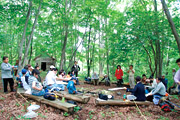
Ricoh parent-child nature school held (Ricoh Group/Japan)
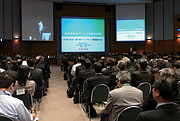
Ricoh Group's Sustainable Environmental Management Conference (Ricoh Group/Global)
Green Communication Strategy Meeting in China- Sustainable Environmental Management by Coordinated Efforts in Four Areas (Ricoh Group /China)
"Treasure Program" helps all employees to recognize improvement opportunities and participate in sustainable environmental management.
Executives from different nations emphasize with Ricoh’s environmental management
Suggesting the importance of reflecting the results of environmental management in business performance
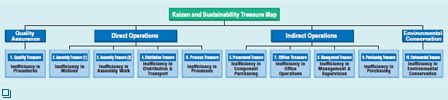
"Treasure Map," a tool to find opportunities for improvement of environmental impact and cost reduction
Waste found creates opportunities for improvement. The results of improvement in environmental impact and costs are made visible
To realize sustainable environmental management with the full participation of all employees, clear instructions from top management and the active involvement of each division are essential. But also important is to give each of the employees opportunities to learn how to be proactive in pursuit of sustainable environmental management in their own operations. While sustainable environmental management is indeed a corporate act, it is also an act that can be realized only by the actions of individual employees. The outcome of sustainable environmental management activities of the Ricoh Group, therefore, greatly depends on the awareness and recognition of our 100,000 plus employees around the world. Through training and awareness-raising sessions, Ricoh employees learn to become good global citizens, good Ricoh Group employees, and specialists in sustainable environmental management.
Environmental education system chart
The AMP is an intensive course that runs six days a week for eight weeks, with formatted discussions covering the latest topics in business administration and using examples of excellent management at global corporations. Most of the students on the course are in managerial positions or on the fast track to management, and they stay in accommodation on the university campus during the course, which helps them develop relationships that can prove useful in their careers. Environmental management at Ricoh was selected as the first case study, when HBS decided to incorporate a case related to sustainability and management in 2010. In March 2009, Dr. Robert Eccles, Senior Lecturer at HBS, visited Japan with the purpose of collecting data in meetings with Ricoh’s president and CEO, executives in charge of finance and environment, and specialists at the Gotemba and Numazu Plants.
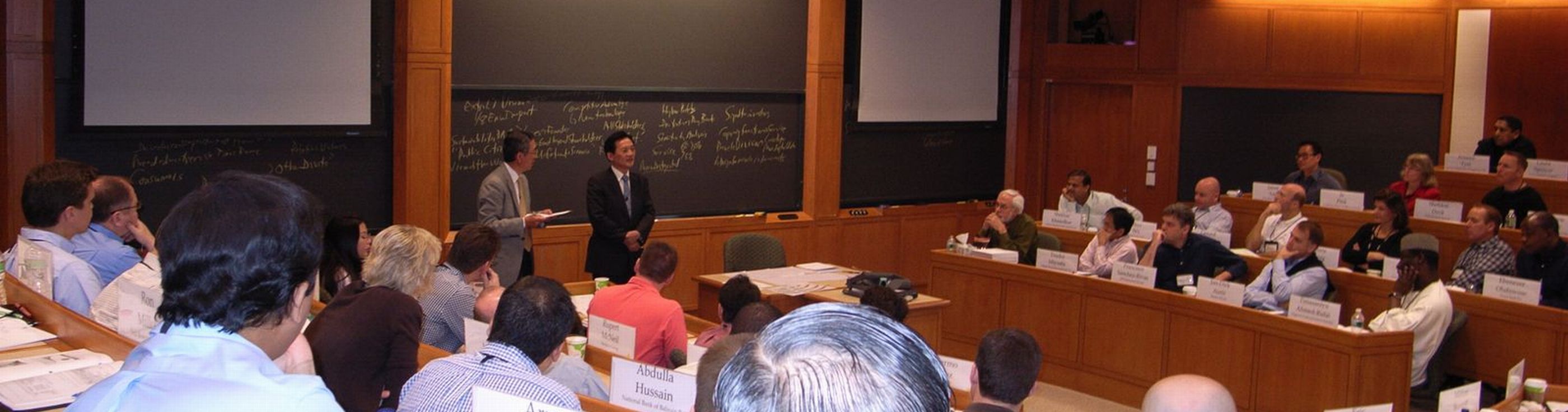
Work in the classroom finally started on May 18, 2010 with case materials prepared from the data collected by Dr. Eccles on his visit to Ricoh. Tatsuo Tani, general manager of the Corporate Environment Division at Ricoh, was invited to this first class.
The students consisted of 140 executives from 40 different countries. The night before the classroom session, the students were asked to read the materials on Ricoh and participate in preliminary group discussions; so they were well prepared. The students engaged in discussions packed with acute insight regarding Ricoh’s long-term environmental impact reduction goals for 2050 and the company’s environmental management activities. Student comments, such as, “Preempting social changes in 2050 is necessary for corporations,” and “We should do a better job of telling consumers and investors how environmental management is linked to improvements in competitive strength,” showed empathy with Ricoh’s environmental management. The discussions were very substantial and provided food for thought for Ricoh in our quest to raise the level of quality management.
Environment Division at Ricoh
The success of the class was so great that even after it had finished, the students and professors surrounded Mr. Tani and continued to ask questions despite running late for their next class. One professor even kept saying “Great work,” and praising Ricoh saying, “America doesn’t have companies like this one! Ricoh will become a classic case study for thinking about the environment and business.” Listening to the discussions, I recognized yet again the importance of policies that link the results of environmental management to investor and customer value in the shortest time possible, reflecting the results in stock prices and business performance. Taking this issue back to Japan, we promptly started internal discussions and I have a sense that Ricoh’s corporate value will be rated even higher if we communicate more effectively with investors who lean toward short-term profits. Also, Harvard University is originally a customer of IKON Office Solutions and as a result of this event, the university showed a greater interest in products made by Ricoh, so for IKON it was also an opportunity to broaden its business from the perspective of the environment.”
Environment-related specialized training courses Life Cycle Assessment (LCA) (basic) Life Cycle Assessment (LCA) (application) Safety of Supplies (elementary) Safety of Supplies (advanced) Environment-Related Laws and Regulations Noise (basic) Recyclable Design Thermal Design for Office Equipment Ricoh Group's Chemical Substance Management System (outline)
The most urgent agenda now is how China will balance economic growth with environmental preservation. Ricoh Group firms—which conduct businesses in four stages: development and design, procurement and manufacturing, sales, and distribution—will cooperate in Quaternity to implement sustainable environmental management by simultaneously making a profit and contributing to environmental preservation under the motto "No growth strategy without sustainable environmental management."
Environmental education system chart

The AMP is an intensive course that runs six days a week for eight weeks, with formatted discussions covering the latest topics in business administration and using examples of excellent management at global corporations. Most of the students on the course are in managerial positions or on the fast track to management, and they stay in accommodation on the university campus during the course, which helps them develop relationships that can prove useful in their careers. Environmental management at Ricoh was selected as the first case study, when HBS decided to incorporate a case related to sustainability and management in 2010. In March 2009, Dr. Robert Eccles, Senior Lecturer at HBS, visited Japan with the purpose of collecting data in meetings with Ricoh’s president and CEO, executives in charge of finance and environment, and specialists at the Gotemba and Numazu Plants.
Work in the classroom finally started on May 18, 2010 with case materials prepared from the data collected by Dr. Eccles on his visit to Ricoh. Tatsuo Tani, general manager of the Corporate Environment Division at Ricoh, was invited to this first class.
The students consisted of 140 executives from 40 different countries. The night before the classroom session, the students were asked to read the materials on Ricoh and participate in preliminary group discussions; so they were well prepared. The students engaged in discussions packed with acute insight regarding Ricoh’s long-term environmental impact reduction goals for 2050 and the company’s environmental management activities. Student comments, such as, “Preempting social changes in 2050 is necessary for corporations,” and “We should do a better job of telling consumers and investors how environmental management is linked to improvements in competitive strength,” showed empathy with Ricoh’s environmental management. The discussions were very substantial and provided food for thought for Ricoh in our quest to raise the level of quality management.

Environment Division at Ricoh
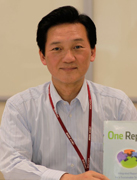
The success of the class was so great that even after it had finished, the students and professors surrounded Mr. Tani and continued to ask questions despite running late for their next class. One professor even kept saying “Great work,” and praising Ricoh saying, “America doesn’t have companies like this one! Ricoh will become a classic case study for thinking about the environment and business.” Listening to the discussions, I recognized yet again the importance of policies that link the results of environmental management to investor and customer value in the shortest time possible, reflecting the results in stock prices and business performance. Taking this issue back to Japan, we promptly started internal discussions and I have a sense that Ricoh’s corporate value will be rated even higher if we communicate more effectively with investors who lean toward short-term profits. Also, Harvard University is originally a customer of IKON Office Solutions and as a result of this event, the university showed a greater interest in products made by Ricoh, so for IKON it was also an opportunity to broaden its business from the perspective of the environment.”
[Teaching materials used at HBS (English, PDF) available]
Anyone can purchase and download the teaching materials on environmental management at Ricoh (English, PDF) used for classes at HBS at a cost of $6.95 from the Harvard Business Review online shop. If you are interested, please be sure to get your hands on an original copy.
Environment-related specialized training courses Life Cycle Assessment (LCA) (basic) Life Cycle Assessment (LCA) (application) Safety of Supplies (elementary) Safety of Supplies (advanced) Environment-Related Laws and Regulations Noise (basic) Recyclable Design Thermal Design for Office Equipment Ricoh Group's Chemical Substance Management System (outline)
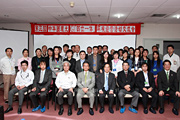
The most urgent agenda now is how China will balance economic growth with environmental preservation. Ricoh Group firms—which conduct businesses in four stages: development and design, procurement and manufacturing, sales, and distribution—will cooperate in Quaternity to implement sustainable environmental management by simultaneously making a profit and contributing to environmental preservation under the motto "No growth strategy without sustainable environmental management."


(Ricoh Electronics, Inc./U.S.)